Travel hit a high in 2025 with 3.27 crore trips from India. Demand grew fast as 2 crore people flew internationally in the final quarter of that year. You often lose time because of small errors in paperwork or choosing the wrong visa types for Indians.
This guide clarifies visa rules for Indian citizens for your 2026 trips. We cover the visa application process for Indians and the travel requirements for Indian citizens at the border.
EU guidance says ETIAS starts in late 2026. Appointment wait times remain estimates only. Follow these visa rules for Indian citizens to avoid rejections.
Visa Rules for Indian Citizens by Visa Type and Destination Pattern
Picking the right category is your first hurdle. Most travellers get stuck because they confuse visa types for Indians, which leads to denied boarding.
Under current visa rules for Indian citizens, a tourist permit won’t work for a short tech workshop in Berlin or London. You need a business entry for that. Following the latest visa rules for Indian citizens helps you avoid these costly mistakes.
A) The 5 Visa Types Indians Commonly Mix Up
- Tourist and Visitor Visa: Use this for holidays. Some countries now ask for a host ID if you stay with friends.
- Business Visa: This is for meetings only. Don’t use it to seek a job.
- Student Visa: You need an admission letter and a clear funding plan.
- Work Visa: These often involve a lottery or skilled points system.
- Transit Visa: You might need a transit visa for a London or Dubai layover, even if you stay airside.
B) Visa Free, Visa on Arrival, eVisa, ETA
The eVisa for Indian passport holders is now common for Russia and Japan. However, a visa on arrival for Indians in Thailand or Indonesia still requires you to show $500 in cash or a card. Always check the latest visa rules for Indian citizens before you fly, as lists change.
C) The Less Obvious Category
Some visa rules for Indian citizens apply even if you don’t leave the plane. A transit visa is mandatory for certain UK or Canadian layovers. Other countries require pre-travel authorisation even for visa-free entry.
Quick Decision Table
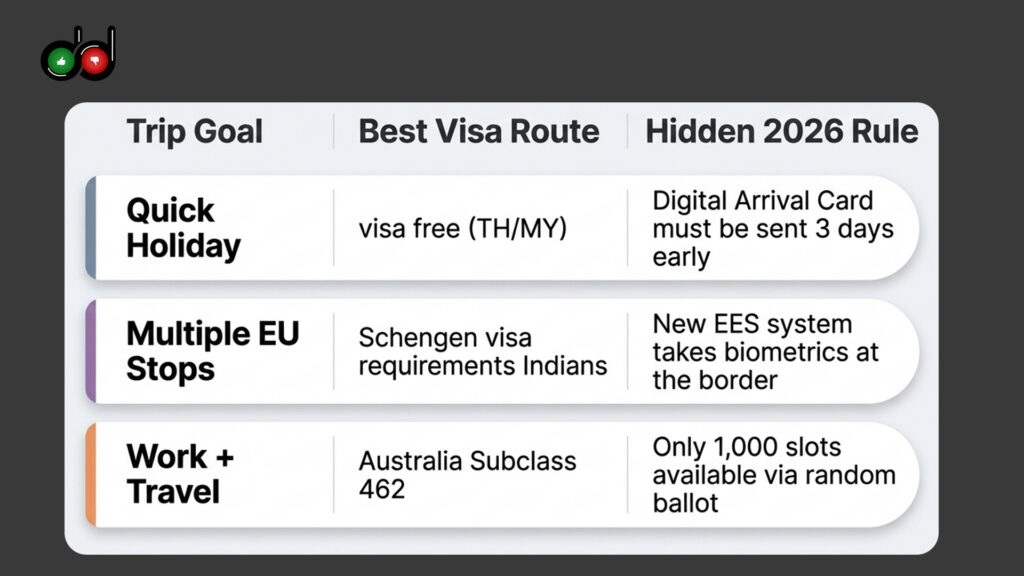
These visa rules for Indian citizens ensure your profile matches your purpose. Getting this part right sets the stage for a smooth visa application process for Indians.
Visa Application Process for Indians: The Step-by-Step Path That Prevents Rejections
Success depends on how you handle the official visa application process for Indians. Even minor errors in your digital forms can lead to immediate refusal. Follow this path to keep your travel plans on track for 2026.
Step 1: Choose the Right Application Channel
Stop using unofficial third-party sites. Always go through the embassy portal or authorised centres like VFS Global. The Japan visa appointment rule 2026 now requires you to book a slot online if you live in Chennai or Hyderabad; walk-ins ended in March.
For the US, remember that visa types for Indians like the B1/B2 (Dropbox) are now centralised in New Delhi.
Step 2: Build a Visa File That Matches Your Profile
- Salaried Applicants: You must provide an original NOC on company letterhead and 6 months of salary slips.
- Self-Employed: Include your GST registration and the last three years of ITR.
- Students: Carry your Bonafide Certificate and a signed letter from your sponsor.
- Sponsorship: If a relative pays for you, include their proof of funds for the visa and a notarised invitation.
Step 3: Appointments and Wait Times
The US B1/B2 visa visa wait time in India varies by city.. Chennai currently offers slots within 1.5 months, while Mumbai averages 10 months. Check these daily, as new slots open often.
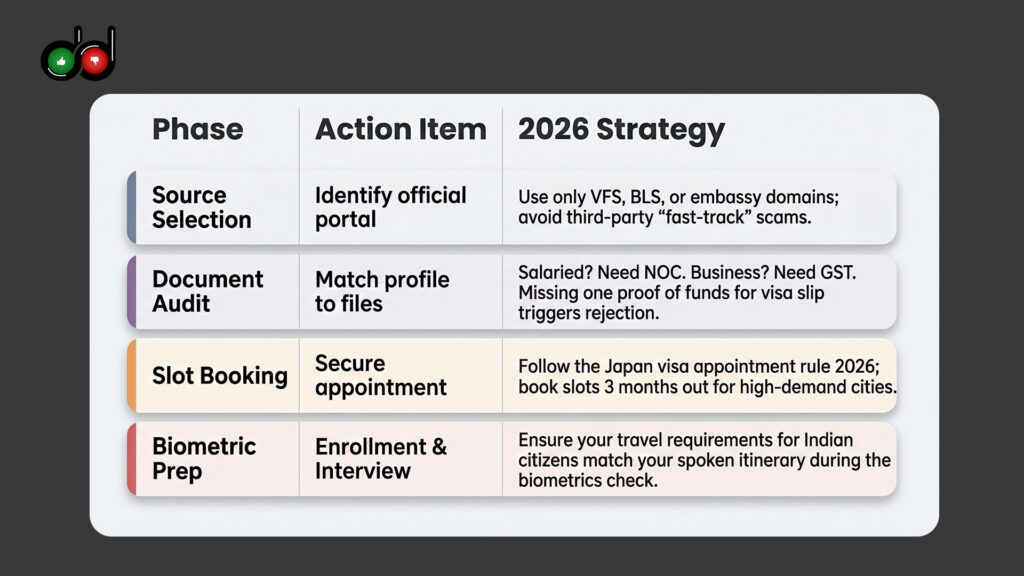
Step 4: Biometrics and Interviews
Schengen visa requirements for Indians now involve the Entry/Exit System (EES) for biometric capture. During interviews, avoid vague answers like “I just want to see the city.” Instead, explain your specific daily plans to show your travel intent is real.
Building a strong file simplifies the visa application process for Indians. Next, we will check the specific travel requirements for Indian citizens that matter at the airport.
Travel Requirements for Indian Citizens: What Immigration Checks First
Getting your passport stamped at the embassy is only half the battle. To clear the border, you must meet specific travel requirements for Indian citizens at the immigration counter. Officers in 2026 are stricter about digital verifications and physical documents alike.
1. Passport Validity and Blank Pages Rules
Airlines strictly enforce the six-month rule. If your passport expires in less than six months from your travel date, they will deny you boarding.
- Check for Blank Space: Certain visa types for Indians require full-page stickers. You generally need at least two entirely blank pages for entry and exit stamps.
- Physical Condition: Ensure your passport has no torn pages or data-chip damage. These issues lead to immediate deportation or boarding denials.
2. Proof of Funds and Financial Story
Immigration officers often ask for fresh proof of funds for visa checks at the desk. Under Schengen visa requirements, Indians must show roughly €100 for each day of the stay.
Carry a printed bank statement from the last 90 days or show a live balance on your travel card app. Avoid making large, unexplained deposits right before you travel. This looks suspicious during a random check of your visa rules for Indian citizens’ compliance.
3. Travel Insurance, Hotel, and Itinerary Rules
For many regions, travel insurance for a visa is a mandatory entry document. Your policy must cover at least $30,000 to $50,000 for medical emergencies and include clauses required by local visa rules for Indian citizens.
- Verification: Keep a printed copy of your hotel bookings.
- Host Details: If you stay with a friend, have their invitation letter and local ID copy ready. Officers may call them to verify your travel requirements for Indian citizens.
4. Return Ticket and Onwards Travel
Meeting the onwards ticket requirement is non-negotiable for almost all visas on arrival for Indian destinations. You must show a confirmed flight out of the country; “dummy” tickets often fail verification in 2026.
If you are on a multi-country tour, have the next flight and the visa types for Indians required for that next stop ready on your phone or in a folder. Following these visa rules for Indian citizens ensures you don’t get turned back at the gate.
How Dos and Don’ts Simplify Visa Rules for Indian Citizens
Traditional platforms focus on subjective reviews, but Dos and Don’ts provides objective, location-specific guidelines for visa rules for Indian citizens.
We bridge the information gap regarding local requirements and etiquette to ensure a confident travel experience across 10,000+ spaces.
Key Features for Planning with Confidence:
- Verified Rule Sets: Access factual, up-to-date documentation and entry requirements for visa rules for Indian citizens.
- Structured Information: Use easy-to-read, bulleted guidelines instead of long-form reviews for quick consumption.
- Universal Coverage: Get behavioural guidance for government offices, landmarks, and private spaces globally.
- Cultural Intelligence: Understand specific restrictions and traditions to remain respectful in any area.
By focusing on preparedness, Dos and Don’ts ensures you handle visa rules for Indian citizens without friction. Explore how Dos and Don’ts help you visit with confidence. → Dos and Don’ts
Conclusion
Visa rules for Indian citizens in 2026 reward preparation more than luck. Minor errors like inconsistent bank statements or missing travel insurance for visa documents cause immediate rejections.
These failures often lead to forfeited flight costs and permanent marks on your immigration history. Worse, being turned back at the border is humiliating and expensive. Avoid these high-stakes risks by sticking to the correct visa application process for Indians.
Dos and Don’ts provides the verified, objective guidelines you need to navigate visa rules for Indian citizens safely. Our structured checklists ensure you meet every requirement before you arrive at the counter.
FAQs
1. What are the visa rules for Indian citizens when a country offers a visa on arrival?
Even with a visa on arrival for Indians, you must follow specific visa rules for Indian citizens. This includes showing proof of funds for a visa, a confirmed onwards ticket requirement, and meeting the travel requirements for Indian citizens at the border.
2. What is the safest visa application process for Indians to avoid fraud?
The safest visa application process for Indians involves using official portals. Stick to authorised channels for visa types for Indians, like the eVisa for Indian passport holders. Avoid agents who promise “guaranteed” entries against visa rules for Indian citizens.
3. How much bank balance is needed for a tourist visa?
The proof of funds for a visa varies by country. For Schengen visa requirements, Indians must show roughly €100 daily. Your balance must justify the travel requirements for Indian citizens based on your specific trip length and local costs.
4. Do travel requirements for Indian citizens include travel insurance?
Yes, travel insurance for a visa is mandatory for many visa types for Indians. It ensures you meet the travel requirements for Indian citizens regarding health emergencies. Most visa rules for Indian citizens for Europe or the USA require specific minimum coverage.
5. When will ETIAS start for travel to Europe?
Official guidance states ETIAS begins in late 2026. This changes the visa rules for Indian citizens who previously travelled visa-free. It will become a core part of the travel requirements for Indian citizens visiting the Schengen Zone soon.
6. Why do appointment wait times change so much for US visas?
The US B1/B2 visa India wait time shifts based on local demand and embassy staffing. These estimates are part of the visa application process for Indians and vary by city. Check the latest visa rules for Indian citizens frequently.
Leave a Reply