Getting travel documents shouldn’t be hard. Updated passport rules in India for 2026 make the system faster for you. Last year, the government issued over 1.4 crore passports.
The current passport application process in India uses ePassport India chips for better security. Many people face rejection because they ignore specific passport document requirements India’s offices demand.
You must verify your proof of address for your passport before booking any slots. Dr S. Jaishankar noted that passport numbers grew from 91 lakh to 1.46 crore. Follow these passport rules in India to avoid delays.
Passport Rules in India for Fresh Applications (Passport Application Process India)
Applying for a new travel document is easy once you know the updated passport rules in India. The passport application process in India requires you to register on the government portal and choose an available slot.
1. Online Steps That Decide Your Timeline
Register, fill out your details, and pay the fee to book your visit. You can visit a centre following Passport Seva Kendra rules or a nearby Post Office Passport Seva Kendra.
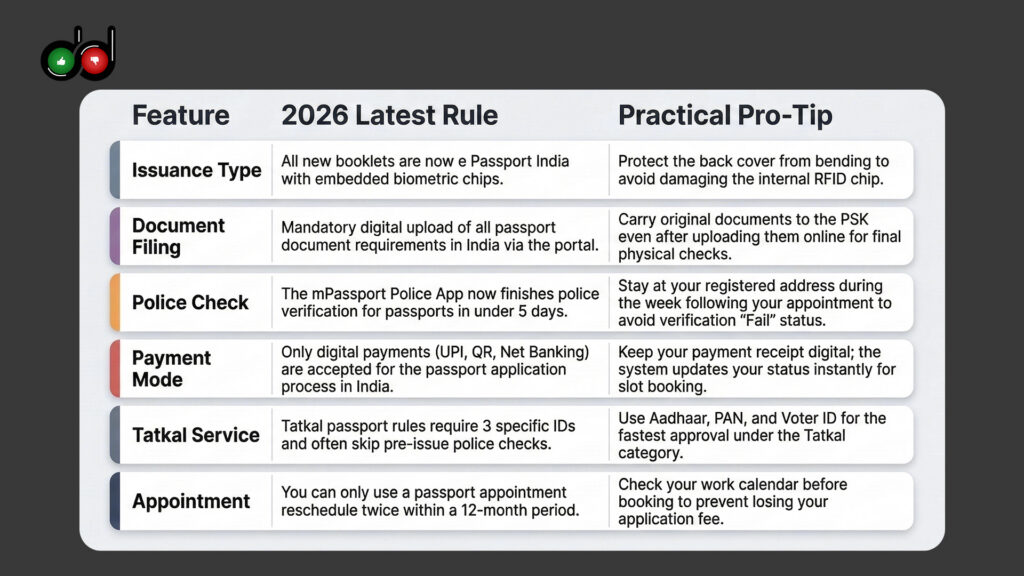
All new applicants now receive an ePassport India with an embedded chip for better security.
2. Appointment Rules Many People Learn Too Late
Life happens, but a passport appointment reschedule is limited to two attempts per year. If you exceed this, your application closes. Strict Tatkal passport rules often allow only one reschedule, so choose your dates carefully.
3. PSK Counter Reality Check
Bring your originals and self-attested copies. Staff verify your identity and take your biometrics on-site. Meeting the passport document requirements India’s authorities set is vital for a “Clear” status.
4. Police Verification Timing
A local officer completes the police verification for the passport by visiting your home. They check your proof of address for your passport and talk to neighbours. If you follow these passport rules in India, you will get your booklet quickly.
Understanding these passport rules in India keeps your travel timeline on track. With your application submitted, getting your paperwork in order is the next major step to success.
Passport Rules in India for Proofs and Forms (Passport Document Requirements India)
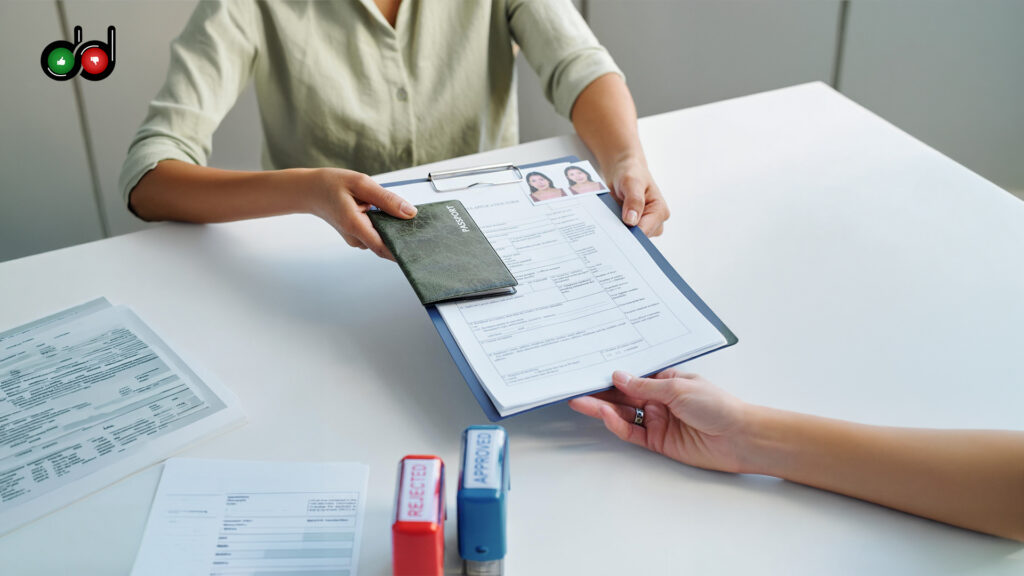
Preparing your documents is the most important part of the passport application process in India and is required for success. Any error in your name or stay details can lead to your file being put “on hold”.
1. The Three Proof Buckets You Must Get Right
You need three main types of evidence: identity, address, and date of birth. For most people, a single Aadhaar card covers all three, making it the top choice for passport document requirements in India officers look for first.
If you don’t have Aadhaar, you can use:
- Identity: Voter ID, PAN Card, or a driving licence.
- Address: Proof of address for passport can include utility bills (electricity, water, or gas) in your name.
- Date of Birth: A birth certificate is best. You can also use a school leaving certificate or a 10th-grade marksheet.
2. Name and Address Mismatch Traps
A small spelling mistake across different IDs is a common reason for rejection under current passport rules in India. If your Aadhaar shows a different house number than your electricity bill, fix it before your appointment.
If you live in a rented house, only a registered rent agreement works as valid proof of address for a passport. Notarised agreements often get rejected at the counter.
3. Minors and Family Applications
Following minor passport rules in India sets is mandatory for parents. You must provide Annexure D, which is a declaration signed by both parents. If one parent is abroad, you need Annexure C. Minors don’t give fingerprints if they are under five years old, but they still need to visit the centre with their parents.
4. Annexures and Declarations People Skip
Special cases like a name change after marriage or being a single parent require specific forms. For example, Annexure E is a standard self-declaration that most adult applicants must sign. Always download the latest versions from the official portal to stay within passport rules in India.
Getting these papers right ensures you won’t have to visit the centre a second time. Now that your documents are ready, you should check how long your new book remains valid and when you might need a refresh.
Passport Validity Rules in India 2026 and Reissue Triggers
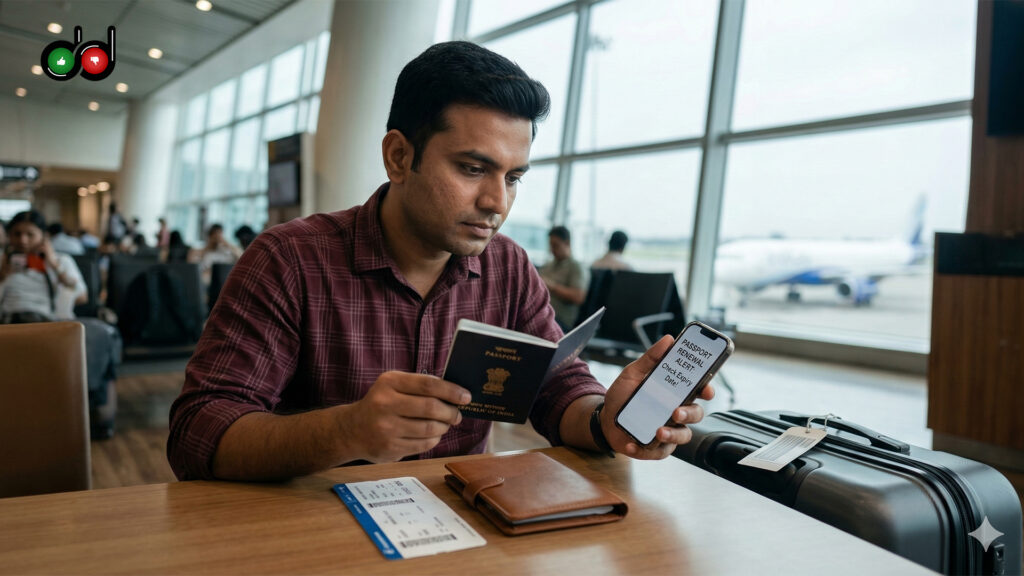
Understanding how long your travel document stays active is a vital part of following passport rules in India. You don’t want to realise your papers expired just days before a big trip.
1. Adult and Minor Validity Basics
According to passport rules in India, most adults receive a 10-year passport validity period in India.
- Minors: Under minor passport rules in India, documents stay valid for five years or until the child turns 18.
- Teens: If you are between 15 and 18, you can choose a full 10-year ePassport India by paying the adult fee.
This choice simplifies your future passport application process in India.
2. Reissue Moments That Catch People Off Guard
You must apply for a reissue passport in India if you have less than six months of validity left. Many countries deny visas if your document is near expiry. Other common reasons for a reissue include:
- Running out of pages for stamps.
- Damaging the booklet or the chip.
- Changing your name or home address.
3. Fees, Pages, and Add-on Services
The fee for a 36-page booklet is ₹1,500, while a 60-page jumbo booklet costs ₹2,000. If you need it fast, Tatkal passport rules require an extra ₹2,000 payment. Following these passport rules in India helps you avoid last-minute stress. All these costs align with the official passport rules in India for 2026.
Quick Guide to Passport Rules in India (2026 Updates):
How Dos and Don’ts Take the Guesswork Out of Indian Passport Rules, Documents, and Validity
Instead of reading subjective reviews, use Dos and Don’ts for objective, location-specific passport rules in India. Our platform bridges the gap regarding local norms to ensure a confident experience at the Post Office Passport Seva Kendra.
Key Features for Confidence:
- Verified Rule Sets: Access factual, up-to-date passport document requirements in India needs.
- Structured Information: Get easy-to-read, bulleted Passport Seva Kendra rules.
- Universal Coverage: Guidance for government offices following passport rules in India.
- Time & Stress Savings: Know exactly what is expected for your passport application process in India.
- Cultural Intelligence: Understand etiquette for administrative areas.
Explore how Dos and Don’ts simplifies passport rules in India → Dos and Don’ts
Getting your documents right is simpler when you have a clear plan.
Conclusion
Mastering passport rules in India requires absolute precision. One tiny name mismatch or an incorrect proof of address for a passport can derail months of travel planning.
Missing a detail in the passport application process in India leads to rejected visas, lost flight money, or even missed career opportunities abroad. These errors often cause permanent delays and unnecessary legal stress.
To prevent these failures, Dos and Don’ts offers verified, structured passport document requirements for Indian guidelines. Using these passport rules in India ensures you walk into your appointment prepared and walk out with your travel dreams intact.
Master the passport rules in India and meet all passport document requirements in India to finish your passport application process in India. Visit Dos and Don’ts today.
FAQs
1. What are the passport rules in India for address proof if I recently shifted?
Under current passport rules in India, you must provide proof of address for your current stay for your passport. Use an active bank passbook or a registered rent agreement. This ensures your passport application process in India matches your police verification for passport location.
2. Can I reschedule a PSK appointment if I miss my slot?
Yes, but passport appointment reschedule limits apply. You get two attempts for normal cases under Passport Seva Kendra rules. If you miss these, your passport application process in India closes. Always check the Post Office Passport Seva Kendra availability before rebooking.
3. What is passport validity in India for minors?
Standard passport validity in India for children is five years or until they turn 18. However, minor passport rules in India allow teens aged 15–18 to choose a 10-year ePassport India by paying adult fees and meeting passport document requirements in India.
4. Are Tatkal passport rules in India different from normal applications?
Strict Tatkal passport rules require three specific IDs and an urgency declaration. This speeds up your passport application process in India, often skipping pre-issue police verification for passports. Ensure you meet every passport document requirement for India to avoid immediate rejection at the counter.
5. Do I need photos for the passport application at PSK?
No, staff capture your photo at the centre following Passport Seva Kendra rules. However, minor passport rules in India require parents to bring physical photos for children under four. For adults, the passport application process in India uses digital biometric capture for ePassport India.
6. Is an ePassport mandatory in 2026?
The 2026 passport rules in India mandate the issuance of an ePassport India for all new applicants. While older booklets stay valid until their passport validity in India ends, any reissue of an Indian passport task will now result in a chip-embedded document.
Leave a Reply