Drones have completely changed the way we capture travel memories. From stunning beach sunsets to cinematic mountain shots, we now document experiences like never before. But what many of us overlook is, the LAWS of flying a drone in a foreign or home country as tourists. Drone rules for tourists are now laid extensively and clearly for every destination you travel.
Each destination has its own set of photography rules and drone laws. Ignoring them can lead to fines, confiscation of the device, or even legal trouble ruining your dream trip.
We at Dos and Don’ts have made it easier for you through this blog. If you’re planning to carry your drone on your next trip, here’s everything you should know about drone rules as tourists—explained in a simple and practical way. Now you can capture enchanting images and videos responsibly, legally, and stress-free.
Why Drone Rules Matter for Tourists
At first glance, drone rules can feel unnecessary. But once you understand the reasons, they make complete sense. For all Unmanned Aerial Vehicles(UAV) or drones it is the Civil Aviation of a country that establishes the rules and regulations.
The biggest concern is safety. Drones flying near airports can interfere with aircraft. There have been real incidents where planes had to change routes because of drones nearby.
Then there’s privacy. No one wants a drone hovering over them while they’re relaxing or going about their day.
And finally, security. Flying near government buildings, military areas, or restricted zones is taken very seriously in most countries.
To address these issues, regulatory bodies have introduced standardized rules across regions.
National and International Rules
Even though rules differ from country to country, most of them follow a similar pattern.
- Registration of drones
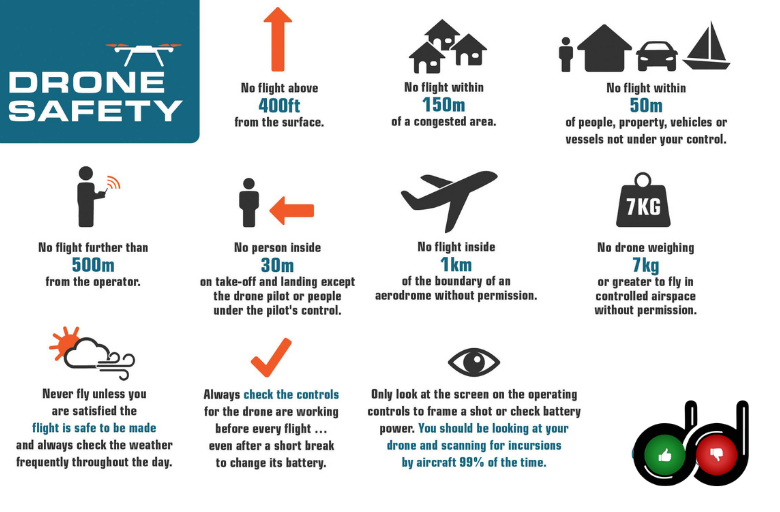
- Altitude and distance limits (usually 120 meters)
- No-fly zones
- Privacy Laws
- Insurance Requirements
This infographic will help you understand the regulations of FAA in the USA, EASA in Europe, DGCA in India, and the UAE
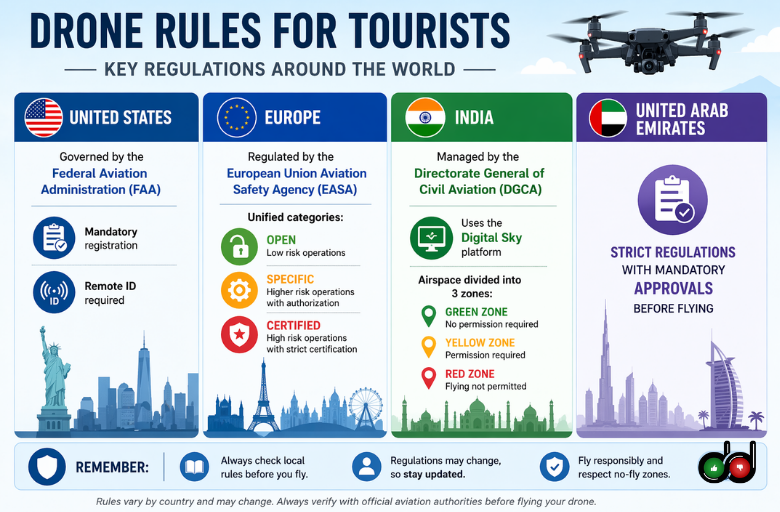
No matter where you travel, never assume rules are the same as your home country. Few countries like Bhutan, Cuba, Brunei and Iran have also banned drones, so check for the drone regulations of your destination.
Simply put—“I didn’t know” is not a valid excuse.
Legal Requirements for Tourists
Before you fly your drone in another country, here are a few things you should check:
- Drone Registration: Many countries require you to register your drone before use
- Permits: Some destinations require advance approval—even for recreational flying
- Import Rules: Certain countries restrict or temporarily confiscate drones at customs
- Insurance: Some countries require mandatory drone insurance especially in parts of Europe and increasingly recommended worldwide. It is important for liability in case of accidents
- Privacy Laws – Filming people without consent can violate local laws. Sensitive locations (religious sites, private property) often have strict restrictions
Tourists often fall into trouble because they assume rules are for locals and not for tourists.
Restricted Areas You Must Avoid
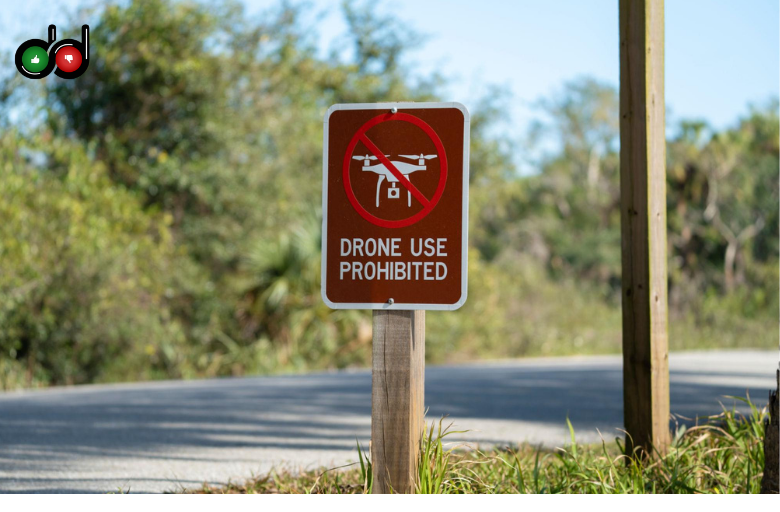
No matter where you are, some places are almost always off-limits:
Common No-Fly Zones:
- Near airports and airbase
- Around military or government buildings
- Inside national parks or protected areas
- Over crowds or busy public spaces
- Heritage Sites
For example, in India, the Digital Sky system clearly marks Red Zones, where drone flying is strictly prohibited.
Safety Rules Every Tourist Must Follow
Even if you’re allowed to fly, there are some basic rules you should stick to:
- Keep your drone where you can see it at all times
- Don’t fly too high (most countries limit it to around 120 meters)
- Stay away from people and vehicles
- Avoid crowded places and buildings
- Avoid flying in bad weather
- Stick to daytime flying (in most places)
These rules are simple, but they make a big difference.
Common Mistakes Tourists Make
After looking at different cases and travel experiences, a few mistakes come up again and again:
- Not checking rules before traveling
- Flying in restricted zones without realizing
- Skipping registration or permits
- Posting restricted footage online
- Carrying drones into countries where they’re banned
And the consequences?
- Fines
- Drone confiscation
- Trouble with authorities
Pre-Flight Checklist for Tourists
Before you take off, run through this quick checklist:
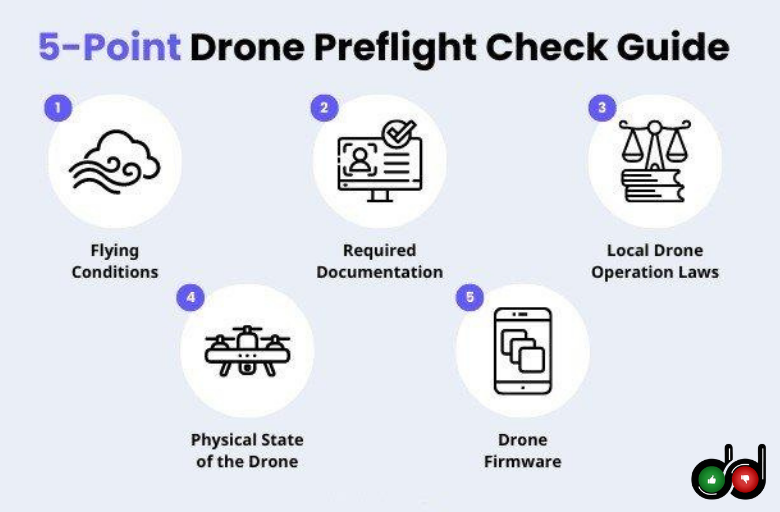
- Research drone laws for your destination
- Register your drone (if required)
- Check no-fly zones on official maps
- Carry permits and insurance documents
- Inspect batteries and equipment
- Respect local privacy and cultural norms
How Dos and Don’ts Simplifies Drone Rules for Tourists
Understanding drone rules in a new country can feel confusing. Every destination has different laws, and most travel websites don’t go beyond surface-level information. That’s where Dos and Don’ts makes a real difference. Learn more about our mission on our About Us page.
Instead of vague advice, it gives you clear, practical information you can actually use before you fly.
It works like a smart travel companion, helping you understand exactly what’s allowed and what’s not—so you don’t have to second-guess.
Here’s how it helps:
Verified Rules: Get accurate information on drone registration, permits, and country-specific requirements—so you’re not relying on outdated or unclear sources.
Location-Based Guidance: Know where you can and cannot fly. From tourist attractions to restricted zones, you get clarity before you even take your drone out.
Safety & Compliance Tips: Understand altitude limits, no-fly zones, and basic safety rules—explained in a simple way anyone can follow.
Avoid Costly Mistakes : Many tourists lose their drones or face fines simply because they didn’t know the rules. This tool helps you avoid those situations.
Travel with Confidence: Instead of worrying about breaking a rule, you can focus on enjoying your trip and capturing great moments—responsibly.
Dos and Don’ts simplifies drone laws the way they should be—clear, practical, and easy to follow
Contact Us if you wish to see more such travel related specific blogs,
Conclusion
Flying a drone while traveling is an amazing experience—but only if done the right way.
The rules aren’t there to stop you—they’re there to keep everyone safe.
So before your next trip, take a little time to check what’s allowed and what’s not.
Because the last thing you want is to lose your drone—or your peace of mind—over something that could have been avoided.
Check out our blog sections for more such travel related rules and regulations.
FAQs
1. Can I carry a drone on an international flight?
Yes, but airline policies and country regulations may vary. Check before you travel.
2. Do tourists need a drone license?
In some countries, yes—especially for commercial use.
3. What happens if I fly in a restricted area?
You may face fines, confiscation, or legal action.
4. Are drone rules the same worldwide?
No, they vary significantly by country.
5. Can I fly drones at tourist attractions?
Often restricted—always check local guidelines first.
6. What is the safest way to carry a drone while travelling
Carry the drone and batteries in your cabin baggage, follow safety guidelines, and check both airline and destination country rules before flying.
7. What are the rules in India?
Airlines in India follow guidelines from the Directorate General of Civil Aviation. Always check airline-specific policies
Batteries → cabin only
Drone → cabin preferred
Leave a Reply