
India draws millions of visitors to its historical places in India every year. These sites carry centuries of history, strict rules, and limited access windows. A casual plan often leads to long queues, denied entry, or missed areas.
This guide helps you plan smarter visits to historical places in India with clear details on monument entry fees, timings, ticket rules, and visitor conduct. You will learn how pricing differs for Indians and foreign tourists, how digital tickets work, and why early morning slots matter.
You will get practical tips on dress, security checks, photography limits, and on-site behaviour. Read this before you book, pack, or arrive. It saves time, money, and frustration.
Entry Fees: Indian vs. Foreigner Pricing 2025
India follows a tiered pricing system at historical places in India to balance public access and site upkeep. Pricing varies by visitor category and monument type.
Key pricing points:
- Indian citizens pay subsidised entry rates at most historical places in India.
- SAARC and BIMSTEC visitors fall under a mid-level pricing slab.
- Foreign tourists pay higher fees that support conservation and site management.
Popular monument examples:
- Taj Mahal: ₹50 for Indians plus ₹200 for mausoleum access, ₹1,100 (~$12.27) for foreign visitors
- Red Fort and Qutub Minar: ₹35 for Indians, ₹550 (~$6.14) for foreign visitors
- Agra Fort: ₹40 for Indians, ₹650 (~$7.25) for foreign visitors
Children under 15 enter all ASI monuments free. Always check the Dos and Don’ts and updated monument entry fee timings online, since access areas and pricing rules differ across monuments and ticket categories.
How to Book Tickets for Historical Monuments
Booking tickets early cuts delays at historical places in India. Most historical places in India now follow digital entry with timed slots and QR checks.
A) Official Online Booking Options
- Open the ASI Payumoney portal or the Monument India app.
- Select the monument from the official ASI list.
- Review updated monument entry fees and timings shown on the page.
B) Step-by-Step Booking Process
- Step #1: Choose your visit date and available time slot
- Step #2: Select the visitor category: Indian, SAARC, BIMSTEC, or foreign.
- Step #3: Complete payment using a UPI card or net banking.
- Step #4: Receive a QR ticket by email and SMS
C) Entry Checks You Must Follow
- Check #1: Carry the same ID used during booking for verification.
- Check #2: Save the QR ticket offline to avoid network issues.
- Check #3: Arrive at the gate early for security and bag checks.
Most travellers now rely on booking historical monuments online to avoid queues and ticket errors. Always check the Dos and Don’ts and ASI monument rules listed on the booking page before visiting historical places in India.
Timings and Golden Hour Strategy
Timing shapes the entire experience at historical places in India. Entry hours vary by monument, season, and crowd controls. Missing the right slot often means long waits or restricted access at historical places in India.
1. Standard Visiting Hours
Most ASI monuments stay open from sunrise to sunset. The last entry usually closes 30 to 60 minutes before sunset. The Taj Mahal remains closed every Friday for general visitors. Always confirm daily schedules and updated monument entry fees and timings online before planning travel.
2. Best Time to Visit
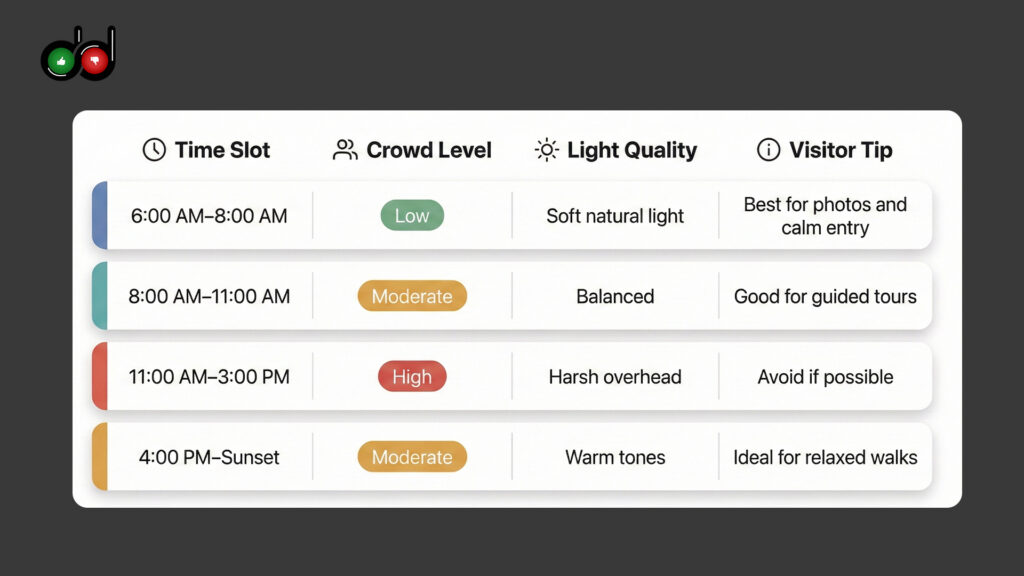
Early morning visits work best. Sunrise hours offer cooler weather, fewer visitors, and better light within monument photography restrictions. Midday visits bring heavy crowds and heat, especially at open forts. Late afternoon visits offer calmer movement and softer light than noon.
3. Special Viewing Rules
The Taj Mahal allows limited night viewing on select full moon dates. These visits require separate tickets, strict ID checks, and fixed entry batches. Check availability in advance to avoid last-minute issues at historical places in India.
Quick Glance: Best Time to Visit
Visitor Guidelines and Etiquette
Rules exist to protect fragile structures at historical places in India. Ignoring them leads to denied entry or fines, even with a valid ticket. Follow posted signs and staff instructions at all historical places in India.
A) Items You Cannot Carry
Drones, tripods, selfie sticks, and external lights need prior permission. Food, tobacco, and lighters stay restricted inside core areas. Large backpacks face checks or storage limits. Carry only essentials and keep your ticket QR ready.
B) Dress and On-Site Conduct
Many forts include active temples or mosques. Cover shoulders and knees. Carry a scarf for head covering if needed. Avoid touching carvings or leaning on stonework. Skin oils damage marble and sandstone over time.Before visiting historical places in India, review dos and don’ts, ASI monument rules, and updated monument entry fees and timings online to prevent entry issues.
How Dos and Don’ts Bring Clarity to Rules and Etiquette

Visitors often reach historical places in India without clear rule awareness. Dos and Don’ts fixes that gap using verified, location-based data instead of opinions. India records over 140 million annual visits across protected monuments, and small mistakes still cause entry denial.
What dos and don’ts help:
- Verified rules on ID checks, dress codes, and monument photography restrictions.
- Clear guidance on bags, prohibited items, and security checks.
- Up-to-date access notes for historical places in India across 10,000-plus public locations.
- Faster planning by skipping unreliable reviews.
Use Dos and Don’ts before visiting to avoid confusion and wasted time.
Conclusion
Confusion around entry rules, visiting hours, and on-site conduct creates real problems at monuments and forts. Visitors miss early slots, buy wrong tickets, carry restricted items, or dress in ways that trigger objections.
These mistakes lead to denied entry, wasted travel days, fines, and tense interactions with staff. In crowded sites, one error can cancel an entire visit.
Dos and Don’ts addresses this gap by giving clear, location-specific rules before you arrive. It helps you prepare properly, respect site requirements, and avoid preventable issues without relying on guesswork or reviews.
Frequently Asked Questions
1. What are the entry rules for historical places in India?
Most historical places in India require online tickets, valid ID, and security screening. Bags, food, drones, and tripods face restrictions. Review ASI monument rules and dos and don’ts before arrival to avoid denied entry.
2. How do monument entry fees and timings differ by visitor type?
Monument entry fee timings vary for Indians, SAARC and BIMSTEC visitors, and foreign tourists. Some areas need add-on tickets, such as Taj Mahal tomb access. Always confirm inclusions during online booking.
3. What is the best time to visit Indian forts and monuments?
Early morning works best for historical places in India. Sunrise slots offer fewer crowds and better conditions. Midday brings heat and queues. Timings change by season, so confirm official hours.
4. Are photography rules strict at historical monuments?
Yes. Monument photography restrictions apply at many sites. Drones, tripods, flash, and interior photos may be banned. Follow signs and staff directions to avoid penalties.
5. Can I book tickets online for all historical monuments?
Most major sites support historical monument booking online through ASI platforms. Smaller monuments may allow offline tickets, but online booking reduces delays during peak periods.
6. What etiquette should visitors follow at forts and heritage sites?
Follow fort visitor guidelines by dressing modestly, avoiding contact with carvings, staying on marked paths, and respecting security rules at historical places in India.
Leave a Reply