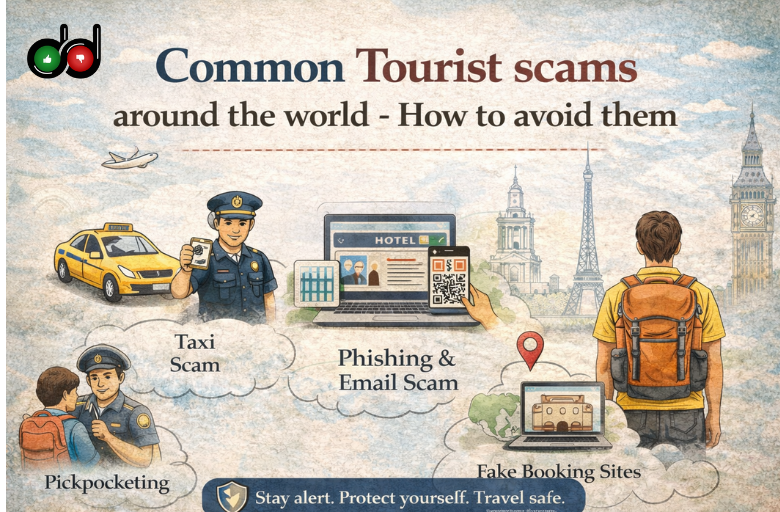
Travel opens doors to new cultures, unforgettable experiences, and meaningful connections—but it also exposes you to common tourist scams around the world. If you don’t know how to avoid travel scams, a dream trip can quickly turn stressful and expensive.
Today, the risk is higher than ever: over 608 million people fall victim to scams globally each year, and travel-related fraud alone is projected to cross $25 billion annually. Even more concerning, 47% of Indian travelers report being scammed, with many losing significant amounts.
This isn’t just bad luck—it’s a pattern. And once you understand how these scams work, you can avoid becoming part of the statistics.
Scammers have now advanced to digital frauds along with the usual traditional tricks. They use taxi fraud, pickpocketing tricks, fake police schemes, and digital frauds to target unsuspecting visitors every day. Understanding these risks—and knowing how to respond—can save you money, time, and peace of mind.
Why travelers are easy targets
Scammers don’t pick victims randomly—they look for opportunity.
When you travel:
- You step into unfamiliar environments
- You depend on strangers for help
- You carry cash, cards, and documents
- You’re often distracted, excited, or rushed
This combination makes tourists high-value, low-resistance targets. Scammers increase their activity by up to 28% during peak tourist seasons, when crowds help them blend in and disappear more easily.
Why These Scams Work
Tourist scams succeed because they manipulate basic human psychology:
- Trust: You assume helpful intent
- Fear: Authority creates pressure
- Confusion: New environments reduce awareness
- Urgency: You react instead of thinking
Scammers don’t rely on force—they rely on your split-second decisions. And with the rise of digital fraud, even experienced travelers are vulnerable. Today, over 36% of travel scams begin online, through fake booking links, phishing emails, or impersonation.
Most Common
Before diving into the list, it helps to understand that tourist scams broadly fall into two categories: traditional scams and new-age scams.
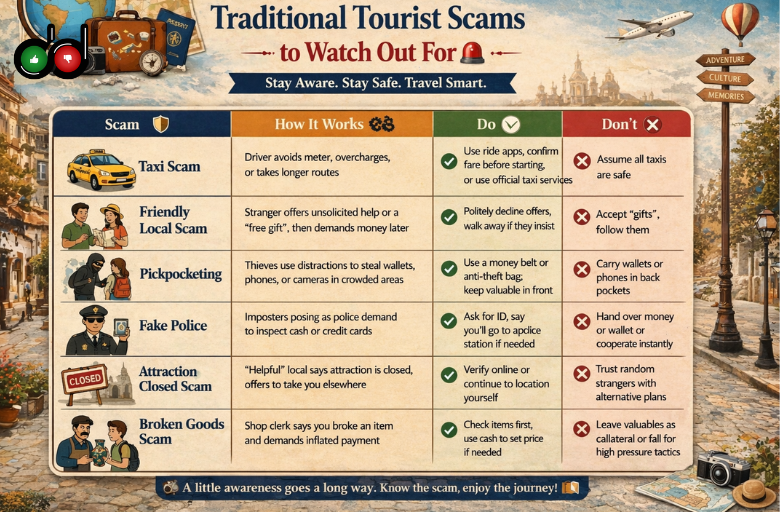
🧳 What are Traditional Scams?
Traditional scams are on-ground, face-to-face tricks that have existed for decades. They rely on human interaction—like a taxi driver overcharging, a “friendly” stranger offering help, or pickpockets creating distractions in crowded places.
They are called traditional scams because:
- They have used these tricks for years across popular tourist destinations.
- They follow predictable patterns
- They depend on human psychology—trust, confusion, and urgency
These scams don’t need technology—just the right moment and an unaware traveller.
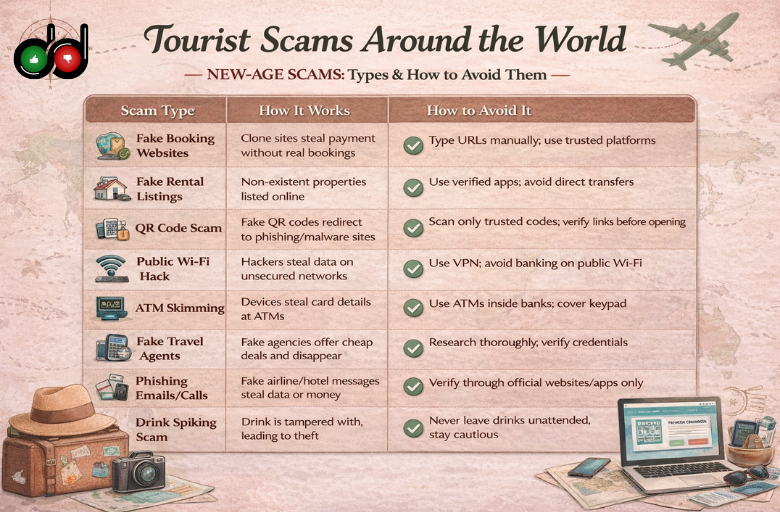
📱 What are New-Age Scams?
New-age scams are digitally driven or tech-enabled frauds that often begin before your trip even starts. These include fake booking websites, phishing emails, QR code scams, and fraudulent listings.
They are called new-age scams because:
- They use technology, AI, and digital platforms
- They are more sophisticated and harder to detect
- They can target you globally, even before you travel
The Key Difference
Traditional scams happen in person and rely on interaction
New-age scams happen online and rely on deception
How Dos and Don’ts helps you to avoid these scams
Key Features for Navigating with Confidence is how it works:
- Verified Rule Sets: Get access to factual, up-to-date safety tips while traveling locally and globally, eliminating the guesswork before you arrive.
- Structured Information: Skip the long-form reviews; our platform offers easy-to-read, bulleted guidelines designed for quick consumption on the go.
- Universal Coverage: We provide behavioral guidance that covers the full spectrum of travel guidelines.
- Time and Stress Savings: Avoid uncomfortable social situations or being looted by knowing exactly what is expected of you in advance.
- Cultural Intelligence: Understand the local specific and common scams and the way to avoid them, ensuring you remain safe at all times.
FAQs
1. What are the most common tourist scams globally?
Common scams include taxi overcharging, pickpocketing, fake police checks, distraction scams, and “friendly local” setups.
2. How can I identify a scam quickly?
Look for red flags such as urgency, unsolicited help, refusal to use official systems (like taxi meters), or requests for cash without receipts.
3. Are scams more common in certain countries?
Scams can occur anywhere, especially in high-tourism areas. The type of scam may vary by region, but no destination is completely scam-free.
4. What should I do if I get scammed?
Stay calm, avoid confrontation, report the incident to local authorities or your embassy if necessary, and block compromised cards immediately.
5. Is it safe to trust locals offering help?
Not always. While many locals are genuinely helpful, unsolicited assistance—especially in tourist hotspots—should be approached cautiously.
6. How can I protect my money while travelling?
Use a mix of payment methods, avoid carrying large cash amounts, use secure wallets, and enable transaction alerts on your cards.
Key Takeaways
- Traveler scams around the world cost individuals and the industry billions, with over 608 million victims annually.
- Scammers target tourists due to their vulnerability in unfamiliar environments and reliance on strangers.
- Common scams include taxi fraud, pickpocketing, and digital scams like phishing and fake bookings.
- Understanding both traditional and new-age scams helps travelers protect themselves and navigate safely.
- Adopting key features such as verified rule sets and cultural intelligence enhances safety and confidence while traveling.
Leave a Reply