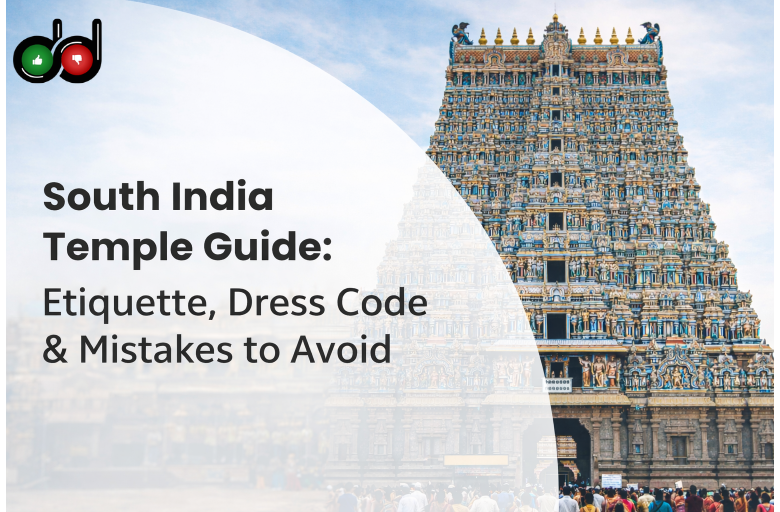
Temples in South India are not just architectural landmarks—they are living spaces of faith, tradition, and deeply rooted cultural practices. Understanding temple etiquette in South India – dos and don’ts is especially important for all visitors. Being mindful of temple etiquette is essential, as what might seem like a small oversight—wearing the wrong dress code, using your phone casually, or not following rituals—can unintentionally come across as disrespectful.
A little awareness before you enter a temple can make your visit more meaningful, respectful, and seamless. This guide will help you navigate the essential dos and don’ts so that you can experience South Indian temples the way they are meant to be experienced.
Why Temple Etiquette Matters
Temple visits form a significant part of travel in India, with religious tourism accounting for over 60% of domestic trips and more than a billion visits recorded annually.
South India, home to thousands of temples and major pilgrimage centers like Tirupati, attracts millions of visitors every year. However, a large number of these visitors are first-time or non-local travelers, many of whom are unfamiliar with temple customs. This gap in awareness often leads to confusion around dress codes, rituals, and behavior, making etiquette an important aspect of the overall experience.
Following temple etiquette helps maintain the sanctity of the space, ensures smooth movement of devotees, and prevents unintentional disruption of rituals. It also reflects respect for the beliefs of the local community and the cultural significance of the temple.
Spiritual significance vs tourism:
Visitors may admire the architecture or history, but devotees use temples as spaces for prayer and spiritual connection. When visitors treat them purely as sightseeing spots, they can disrupt this environment, whereas maintaining decorum helps preserve a respectful space for both worship and visitation.
Respecting local beliefs:
Temple customs—such as dress codes, removing footwear, and photography restrictions—reflect long-standing religious and cultural practices and can vary by temple.
Following these guidelines shows respect for local traditions, helps avoid misunderstandings, and ensures a culturally sensitive visit.
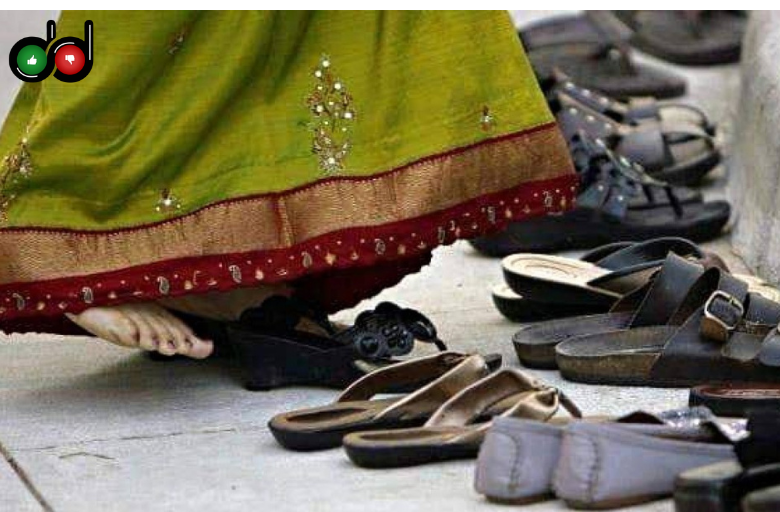
Dress Code Guidelines in South Indian Temples
Most temples in South India expect visitors to dress modestly as a mark of respect for the sanctity of the space. Dress codes are often influenced by traditional practices and may vary depending on the temple. In some temples, especially prominent ones, traditional attire is encouraged or mandatory for entry into certain areas.
What is Considered Appropriate Clothing
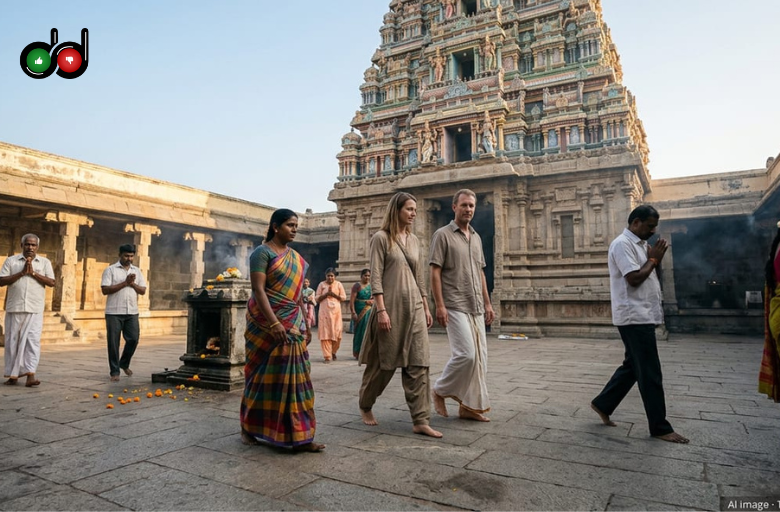
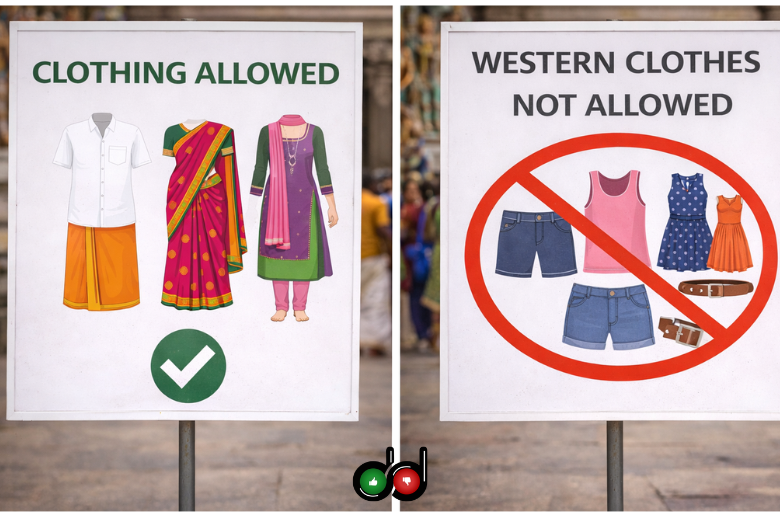
Appropriate clothing typically includes outfits that cover shoulders and knees. For example, visitors to Tirumala Venkateswara Temple are encouraged to wear traditional attire such as sarees, salwar kameez, dhoti, or formal pants and shirts.
Many first-time visitors arrive in casual travel wear like shorts or sleeveless tops and are either denied entry or asked to rent or purchase appropriate clothing near the temple entrance. This often leads to last-minute inconvenience that could easily be avoided with prior awareness
Temple-Specific Dress Rules
Certain temples have stricter requirements. At Padmanabhaswamy Temple, men are required to wear a dhoti(mundu), and shirts must be removed before entering. Women are expected to wear sarees or traditional attire.
Similarly, Guruvayur Temple does not permit modern clothing like jeans or western outfits inside.
👉 These rules are clearly communicated at entrances, and compliance is mandatory for entry.
Behaviour Inside the Temple Premises
Maintaining appropriate behaviour is essential because temples function as active places of worship, not just heritage sites.
Silence and Discipline
Temples like Meenakshi Amman Temple attract thousands of devotees daily. Despite the crowds, there is an expectation of maintaining calm and order inside the premises.
👉Visitors who speak loudly or treat the space casually often draw attention from temple staff or other devotees, as it disrupts the prayerful environment.
Mobile Phone Usage
In many temples, including Chidambaram Nataraja Temple, mobile phones are either restricted or must be kept on silent mode.
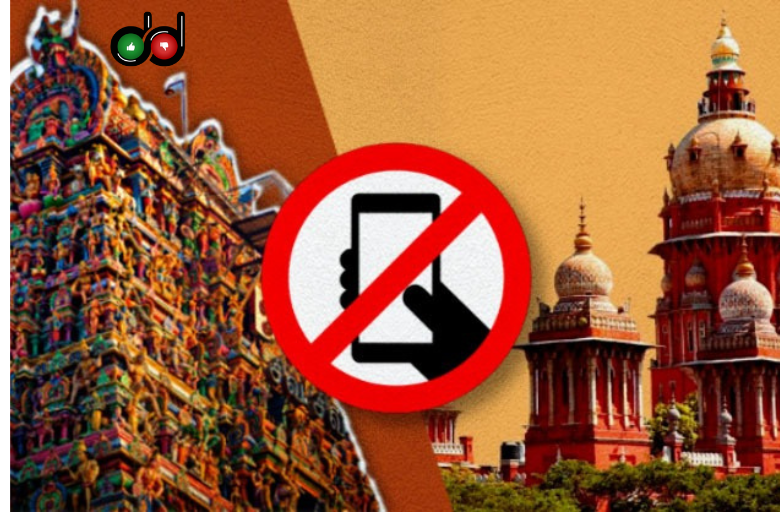
👉 In some temples, lockers are provided at the entrance for depositing phones and electronic items. Do not fall prey to local touts who offer expensive services.
Following Queue Systems
Temples such as Tirumala Venkateswara Temple are known for their highly organized queue systems, sometimes involving waiting periods of several hours.
👉 Attempting to bypass queues or rush forward is strictly discouraged and may lead to intervention by temple authorities.
Understanding Rituals and Practices
Temple rituals are structured and often follow centuries-old traditions.
Prasadam Etiquette
At temples like Tirumala Venkateswara Temple, the famous laddu prasadam is distributed in an orderly manner.
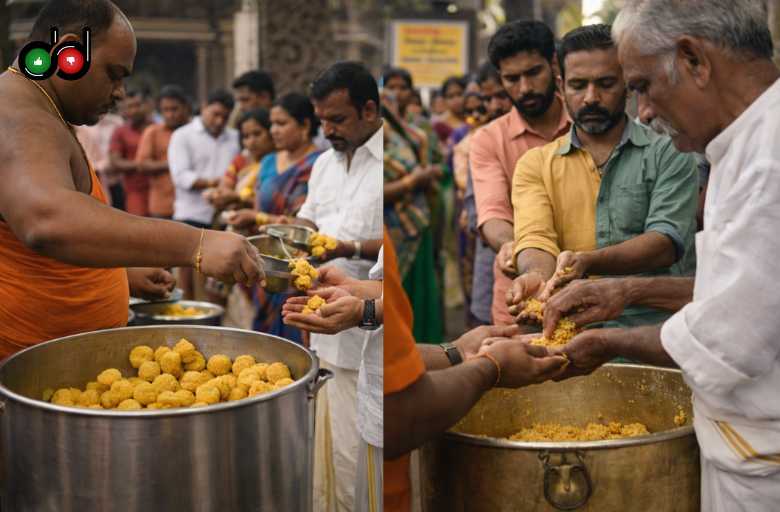
👉 Visitors unfamiliar with the system sometimes rush or try to collect multiple servings, which disrupts the distribution process. Following the queue and accepting the offering respectfully ensures fairness.
Darshan Process
In most temples, darshan is brief to accommodate large crowds. At Sabarimala Temple (during pilgrimage season), crowd management is especially strict.
👉 Devotees are expected to keep moving and avoid stopping near the sanctum.
Offerings and Donations
Many temples have official counters for offerings. For example, at Tirumala Venkateswara Temple, donations are made through authorised systems like hundi (donation boxes).
👉 Visitors are advised to avoid handing money to unauthorised individuals.
Photography and Restricted Areas
Photography rules are strictly enforced in most temples.
Where Photography is Prohibited
In temples like Meenakshi Amman Temple, photography may be allowed in outer corridors but is prohibited inside the sanctum.
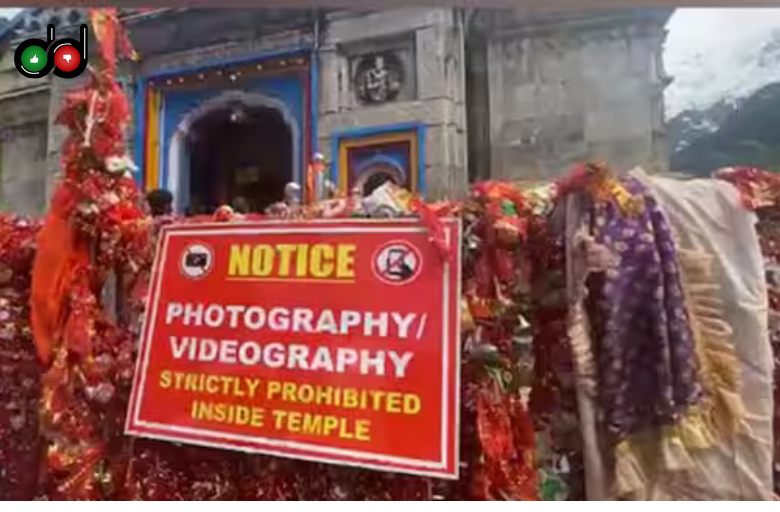
👉 Signboards clearly indicate these restrictions.
Respecting Sacred Zones
The inner sanctum (garbhagriha) is typically restricted to priests. Visitors are not allowed to cross certain boundaries.
👉 Attempting to enter restricted areas can lead to immediate intervention by temple staff.
Common Mistakes Tourists Make
Treating Temples as Tourist Spots
Temples like Hampi Virupaksha Temple attract both tourists and devotees.
👉 Visitors focused only on photography or sightseeing sometimes overlook ongoing rituals, which can be seen as insensitive.
Ignoring Dress Codes
Even at popular temples, visitors are occasionally turned away due to inappropriate clothing.
👉 This is especially common during peak tourist seasons.
Disrespecting Rituals
Standing in restricted areas, interrupting rituals, or not following instructions can disrupt temple proceedings.
👉 Temple staff are usually present to guide visitors, and their instructions should be followed.
Quick Dos and Don’ts Checklist
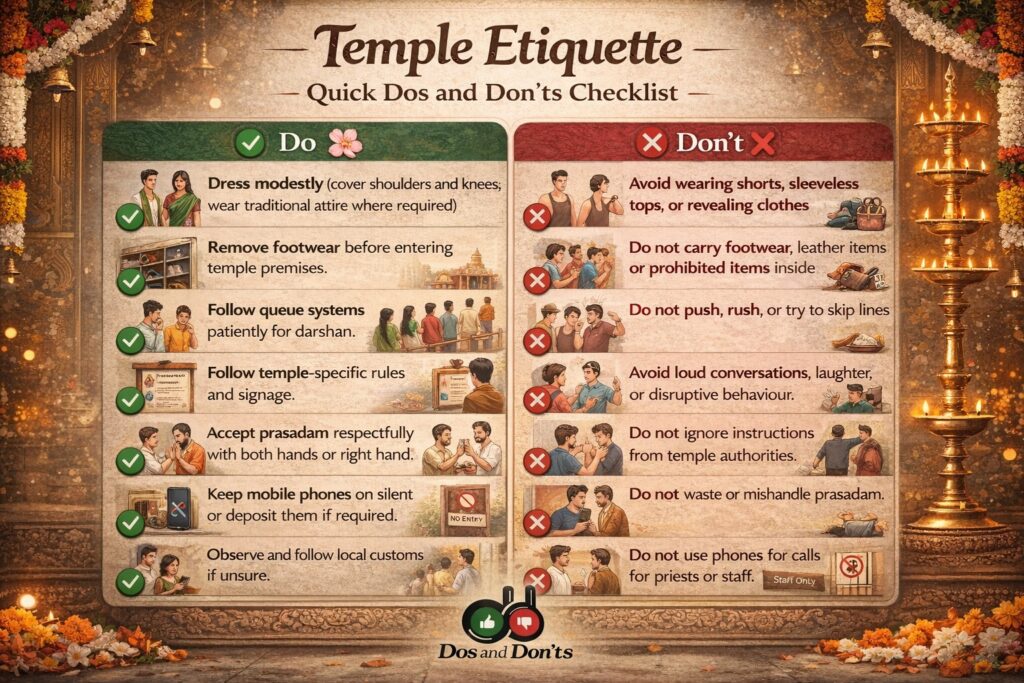
How Dos and Don’ts Guides your temple visits to South India
Key Features for Navigating with Confidence:
Verified Rule Sets: Get access to factual, up-to-date requirements for entry, dress codes, and documentation for safety tips for women traveling alone, eliminating the guesswork before you arrive.
Structured Information: Skip the long-form reviews; our platform offers easy-to-read, bulleted guidelines designed for quick consumption on the go.
Universal Coverage: We provide behavioral guidance that covers the full spectrum of temple etiquettes in South India.
Time and Stress Savings: Avoid uncomfortable social situations or being turned away at the door by knowing exactly what is expected of you in advance.
Cultural Intelligence: Understand the specific etiquette and restrictions of any temple, ensuring you remain respectful of local traditions and administrative policies.
Conclusion
Visiting temples in South India is more than just exploring architecture—it’s about stepping into a deeply rooted spiritual ecosystem. A little awareness about customs, behaviour, and expectations can transform your visit from a casual stop into a meaningful experience. Respect, patience, and observation go a long way in ensuring you leave with not just memories, but understanding.
TEMPLE ETIQUETTE IN SOUTH INDIA — FAQs
1. Can non-Hindus enter all temples in South India?
No. Entry rules vary by temple. Some temples (like certain traditional temples in Kerala and Tamil Nadu) restrict entry to Hindus only, while many others allow visitors of all faiths. Always check the specific temple’s policy before visiting.
2. Is there a strict dress code for temples?
Yes, many temples enforce modest dress codes. This typically means covering shoulders and knees. Some temples (e.g., Guruvayur, Padmanabhaswamy) require traditional attire like sarees, dhotis, or mundu.
3. Are phones allowed inside temples?
In many temples, phones are either restricted or must be kept on silent. Some temples require visitors to deposit phones at designated counters.
4. Can tourists participate in rituals?
Yes, in many temples tourists can participate in general rituals (like receiving prasadam), but certain rituals may be restricted to priests or specific devotees.
5. What is prasadam and how should it be accepted?
Prasadam is food or offering blessed during worship. It should be accepted respectfully, usually with the right hand or both hands, and not wasted.
6. Is photography allowed inside temple premises?
Often, photography is prohibited inside sanctum areas and sometimes throughout the temple. Always follow posted signs or instructions.
Leave a Reply