Category: Health and Fitness

  • Dos and Don’ts of Yoga: Studio Etiquette, Class Rules, and Beginner Guidelines

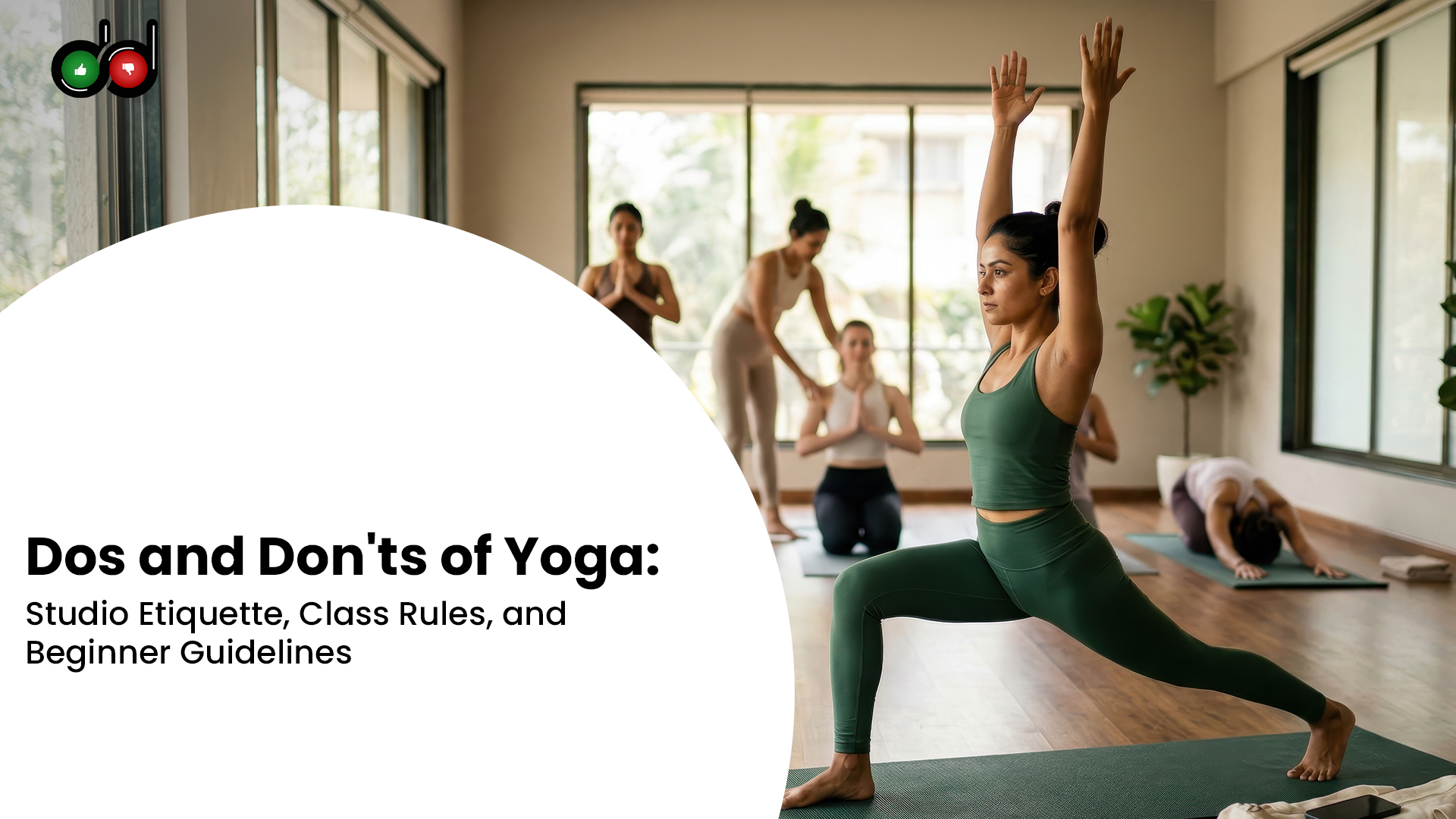
    Dos and Don’ts of Yoga: Studio Etiquette, Class Rules, and Beginner Guidelines

    Yoga has changed lately. Millions of people hit the mat every morning across India. You see studios everywhere. But starting out feels tricky if you ignore the do’s and don’ts of yoga. Many new students miss basic yoga studio etiquette when they first join a class. 

    This guide helps you feel ready. Knowing the do’s and don’ts of yoga makes your practice better for everyone. Follow these yoga practice tips to stay respectful. 

    Let’s look at how to handle yoga for beginners in India.

    Do’s and Don’ts of Yoga Before You Enter the Studio (Yoga Studio Etiquette)

    Your workout begins before you even step onto the floor. Proper yoga studio etiquette ensures you and your classmates stay focused. Following these do’s and don’ts of yoga helps you avoid common mistakes that disrupt the flow of a session.

    1. Arrive Early, Not Exactly On Time

    Showing up right when class starts is a mistake. Most yoga for beginners in India sessions begin with grounding or chanting. Arriving 10 to 15 minutes early gives you time to sign in and set up your mat without rushing. 

    Late entry often violates yoga class rules and might result in a locked door to protect the group’s focus.

    2. Follow the yoga dress code India’s studios expect.

    What you wear matters for both movement and yoga cultural etiquette. Wear modest, stretchable cotton or moisture-wicking fabrics. Avoid overly loose shirts that fall over your head during inversions. 

    Most importantly, skip strong colognes. Deep yoga breathing rules make students very sensitive to smells in the room, so keep it neutral.

    3. Mat Hygiene Is Not Optional

    Sweaty mats are a health risk and a distraction. Good yoga mat hygiene is a sign of a disciplined student.

    • Bring your own mat to ensure a personal, clean surface.
    • If using a shared mat, always place a towel over it.
    • Clean the equipment immediately after the session ends.

    4. Silence Your Phone Completely

    A ringing phone is the ultimate breach of yoga class discipline. Switch your phone to “silent”, not just “vibrate”. Keep your devices in a locker or bag outside the main hall. Many yoga ashram rules prohibit phones entirely to encourage a mental break from the digital world.

    Mastering these initial do’s and don’ts of yoga shows you respect the space. Understanding these yoga class rules makes your transition into the actual practice much smoother.

    Dos and Don’ts of Yoga During the Session (Yoga Class Rules Explained)
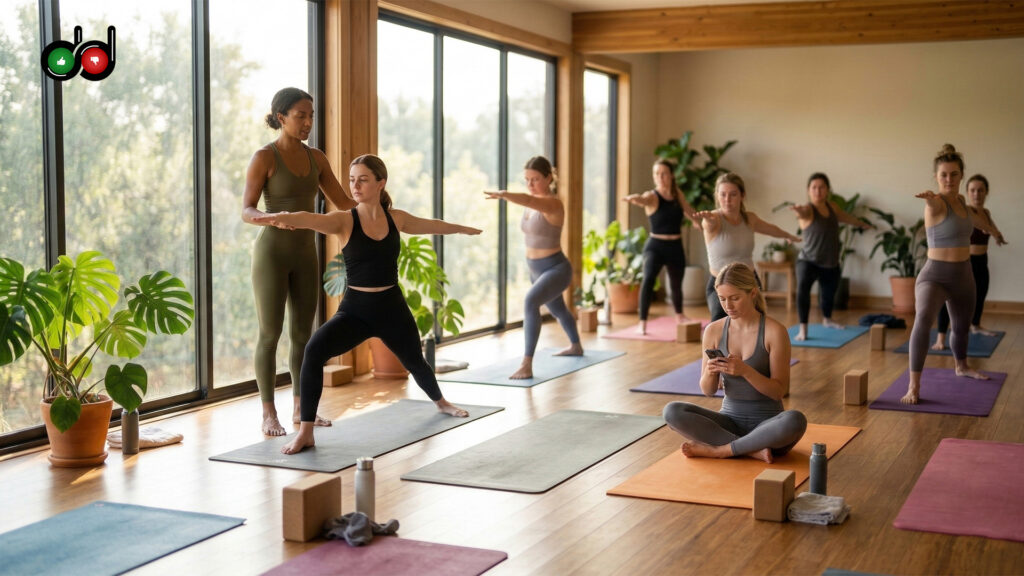
    Dos and Don’ts of Yoga During the Session

    Your focus stays on the mat once the session starts. Following the internal yoga class rules helps maintain a calm environment for everyone in the room. These do’s and don’ts of yoga ensure you get the most out of every movement while keeping others comfortable. 

    Using proper yoga class discipline protects the group energy.

    1. Listen Before You Modify

    If you are new, avoid the urge to copy advanced students. Stick to the teacher’s pace and instructions. Most injuries happen when students ignore yoga for beginners in India guidelines by forcing a pose. 

    Pay close attention to yoga breathing rules that explain when to inhale and exhale during each stretch. Following these do’s and don’ts of yoga keeps your body safe.

    2. Respect Personal Space

    Studios in big cities often get crowded. Be mindful of where you place your mat and avoid stepping on someone else’s space. This is a core part of yoga class discipline in India. 

    Give people enough room to move their arms and legs without bumping into you. Respecting the floor space is one of the most basic yoga class rules.

    3. Avoid Loud Conversations or Self-Promotion

    A yoga class is a place for quiet reflection, not social networking. You must follow yoga session guidelines to keep the room quiet.

    • Keep your voice down before the start and stay silent during the practice.
    • Save your questions for the end of the class to show the yoga teacher respect.
    • Avoid talking during savasana, as this is the most important part of the yoga session guidelines.

    4. Do Not Leave in the Middle Without Informing

    Leaving abruptly disrupts the group’s energy, especially during meditation. If you must leave early, tell the instructor before the class begins. Place your mat near the door and exit quietly before the final relaxation starts. 

    This shows proper yoga teacher respect and keeps the vibe peaceful. Every student should know these yoga class rules.

    Understanding these do’s and don’ts of yoga during the practice builds your confidence. By following yoga studio etiquette, you help everyone succeed. Next, we will cover specific yoga cultural etiquette and tips for those just starting their journey.

    Do’s and Don’ts of Yoga for Beginners in India (Cultural & Practical Guidelines)

    Starting your journey in India involves more than just stretching. You need to grasp the dos and don’ts of yoga to feel comfortable in a local setting. Learning yoga for beginners in India means respecting old traditions. 

    These yoga practice tips help you stay focused and ready for your first day.

    1. Understand That Yoga Is More Than Fitness

    Yoga in India is a spiritual science. You’ll encounter chanting and philosophy alongside physical moves. Embracing this is a big part of yoga cultural etiquette. These do’s and don’ts of yoga cover your mind and body. Yoga is a way of living that requires strong yoga class discipline.

    2. Inform the Instructor About Health Conditions

    Talk to your teacher before the session begins. Mention injuries or health issues like high blood pressure. This shows the yoga teacher respect and keeps you safe. 

    Your instructor will then give you better yoga session guidelines. Clear communication is a major part of the do’s and don’ts of yoga.

    3. Eat Light and Time Your Meals

    Timing your meals is vital. Most yoga ashram rules tell you to practise on an empty stomach. Wait three hours after a heavy meal before you start. This allows you to follow yoga breathing rules without feeling sick. This is an important yoga class rule point to remember.

    4. Avoid Comparing Yourself

    Your progress is yours alone. Avoid looking at others on their mats. This focus builds internal strength and keeps you calm. cEverybody is different, so follow the do’s and don’ts of yoga at your own pace. Staying mindful of your limits helps maintain yoga studio etiquette.

    Do’s and Don’ts of Yoga At a Glance:
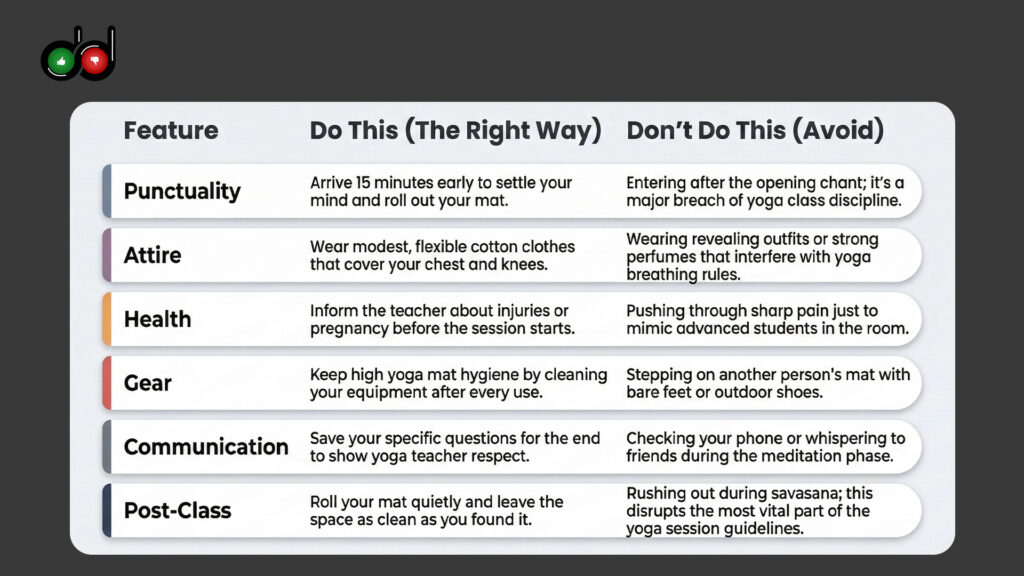
    Do’s and Don’ts of Yoga At a Glance

    These do’s and don’ts of yoga make your transition into a new practice much easier. 

    How Dos and Don’ts Gives You the Yoga Studio Rules and Class Etiquette Before Your First Session

    Finding clear yoga studio etiquette is hard on review sites. Most apps only show photos or ratings. Our platform gives you specific yoga class rules for any location. 

    This makes learning the do’s and don’ts of yoga fast and easy. Knowing the dos and don’ts of yoga ensures a better trip.

    • Verified Rule Sets: Access official yoga dress code details for India and entry needs.
    • Structured Info: Read bulleted yoga session guidelines to save time.
    • Universal Coverage: Find yoga ashram rules and studio norms in one spot.
    • Cultural Intelligence: Master local yoga cultural etiquette to stay respectful.

    We help you plan your visit with facts. Use our tool to master the dos and don’ts of yoga today. Check out how Dos and Don’ts simplifies the dos and don’ts of yoga to help you visit any studio with confidence → Dos and Don’ts

    Conclusion

    Practising yoga in India carries deep cultural weight. However, ignoring the dos and don’ts of yoga leads to sharp social friction. Many beginners fail to follow yoga studio etiquette, resulting in public call-outs or being barred from the hall. 

    Disrespecting yoga cultural etiquette offends local teachers and ruins the group’s focus. You might even find yourself banned from top studios for breaking yoga class rules repeatedly. 

    Dos and Don’ts offer objective facts to prevent these problems. Our platform clarifies the dos and don’ts of yoga so you practise with total confidence.

    Avoid the stress of breaking yoga class rules and master the dos and don’ts of yoga before your next session.

    FAQs

    1. Can I join a yoga class in India without prior experience? 

    Yes. Most studios offer sessions for yoga for beginners in India. Inform the instructor that you are new so they can share essential yoga practice tips. Following the dos and don’ts of yoga ensures you stay safe while building confidence.

    2. Is it mandatory to remove footwear inside yoga studios? 

    Yes. Removing shoes is a universal yoga ashram rule in India. It maintains cleanliness and shows the yoga teacher respect. This is a basic part of yoga studio etiquette that keeps the practice space sacred and clean for every student.

    3. What should I avoid eating before a yoga session? 

    Avoid heavy, fried meals or alcohol. Eat a light snack two hours before following yoga session guidelines. Proper timing helps you follow yoga breathing rules without discomfort. This is a vital part of the dos and don’ts of yoga.

    4. Are mobile phones allowed in yoga classes? 

    Most studios forbid phones during practice to maintain yoga class discipline. Keep devices on silent or in a locker. Avoiding digital distractions is a key yoga class rule point that helps everyone focus on their mindfulness and physical movement.

    5. Is chanting compulsory in yoga classes? 

    No. While common in India, chanting is usually voluntary. Simply staying quiet shows proper yoga cultural etiquette. Respecting the tradition without participating is acceptable. Always follow the do’s and don’ts of yoga regarding silence and group energy in the room.

    6. Can I practise advanced poses as a beginner? 

    No. Attempting difficult moves without guidance violates yoga for beginners in India safety norms. Stick to the teacher’s pace to avoid injury. Mastering the do’s and don’ts of yoga fundamentals first is much better than forcing a complex pose.
    Leave a Reply

    Your email address will not be published. Required fields are marked *

  • Swimming Pool Rules: Safety Guidelines, Dress Code, and Pool Etiquette

    Swimming Pool Rules: Safety Guidelines, Dress Code, and Pool Etiquette

    India’s swimming pool market hit USD 204.6 million in 2024 and is projected to reach USD 286.23 million by 2033. More residential societies, hotels, and gyms are adding pools every year. Most swimmers show up without knowing the actual swimming pool rules. 

    The NCRB 2022 report logged 38,503 drowning deaths in India, 9.1% of all accidental deaths that year. BIS IS 16508:2017 sets legally binding pool safety guidelines in India that operators must follow. Most swimmers have never read it. 

    This guide will break down every swimming pool rule you need to know, from swimming pool dress code to safety requirements and etiquette.

    What India’s BIS Swimming Pool Safety Guidelines Actually Require

    Most people treat swimming pool rules as suggestions on a laminated board near the entrance. They’re not. BIS IS 16508:2017 is a legally binding code covering pool design, operation, and maintenance. Ignoring it creates a real safety risk.

    1. Fencing, Depth Markings, and Safety Equipment Rules

    Every pool must have fencing at least 4 feet high. Depth markings are mandatory at each zone. Life-saving equipment, including lifebuoys, life jackets, and first-aid kits, must stay at poolside at all times. 

    Anti-entrapment drain covers are required under BIS IS 16508 public pool standards to prevent suction hazards, particularly for children.

    2. Lifeguard Requirements: Most Pool Operators Ignore

    Pool safety guidelines in India mandate that public pools employ certified and trained lifeguards. Lifeguard rules in India also require documented CPR training and emergency protocols at every registered facility. 

    Talking to a lifeguard while on duty directly violates swimming pool rules and compromises the safety of every swimmer present.

    3. Water Quality Parameters That Affect Your Health

    Per IS 3328:1993, pools must maintain a pH between 7.2 and 7.8, with free residual chlorine between 0.2 and 0.5 mg/L. Regular bacterial and TDS testing is required to keep society swimming pool rules in India’s compliance intact.. 

    Poor water chemistry links directly to skin infections and swimming pool etiquette breakdowns operators often overlook. Getting the safety structure right matters. What you wear into that water matters just as much.

    Swimming Pool Dress Code Rules in India (What’s Allowed and What Gets You Turned Away)

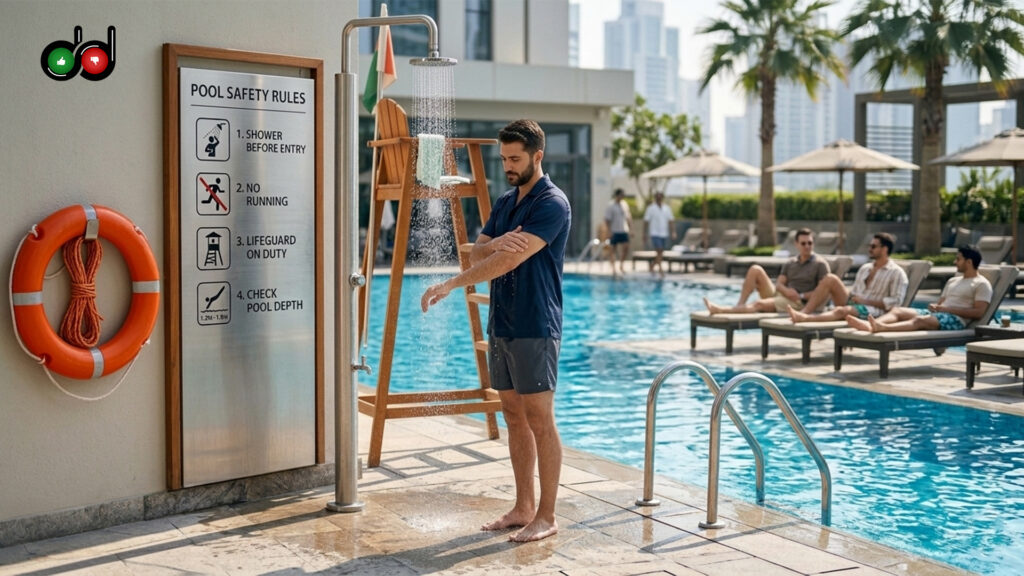
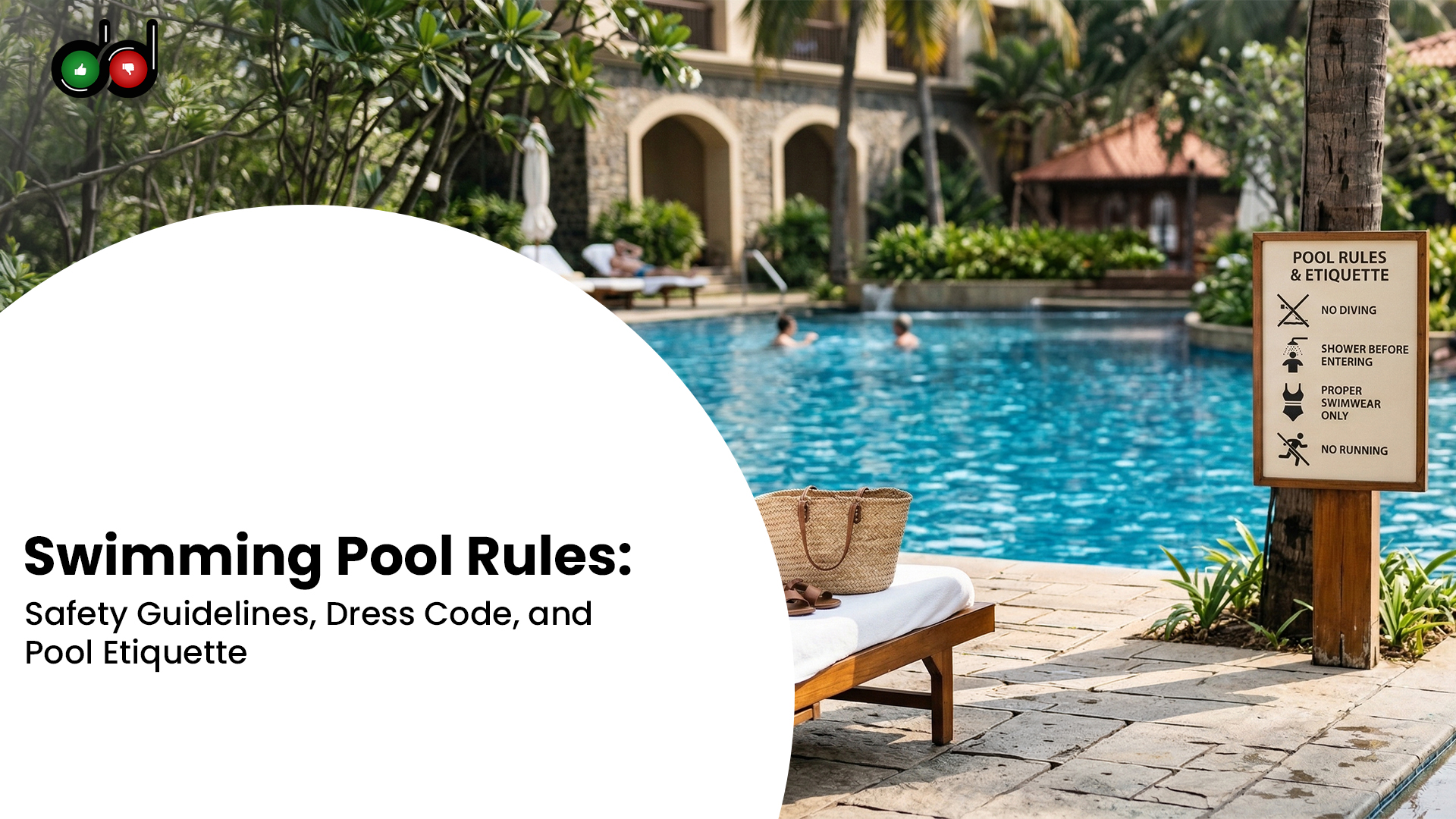
    swimming pool dress code

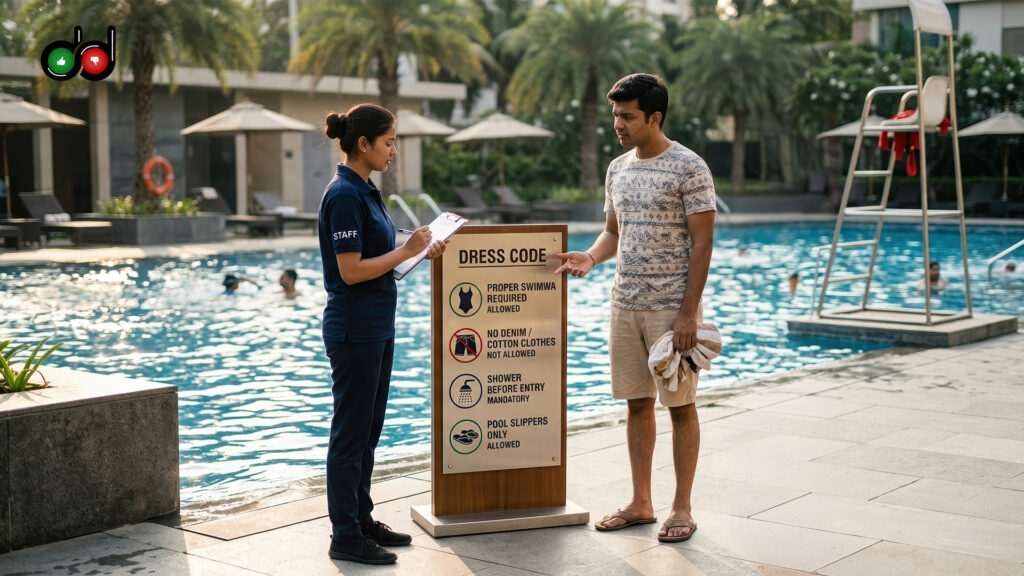
    The most frequent compliance issue at Indian society pools isn’t behaviour. It’s clothing.” Most swimmers show up wearing whatever feels comfortable. That gets them turned away at the gate.

    1. Why Cotton Clothing Is Banned at Virtually Every Pool in India

    Cotton clothes being banned in pool facilities is a firm rule across India. Here’s why:

    • Cotton absorbs water and sheds fibres directly into the filtration system.
    • Fibre buildup accelerates filter blockages within weeks
    • It raises contamination risk and increases maintenance costs for operators.

    Only polyester- or spandex-based swimwear meets swimming pool dress code requirements at BIS-compliant pools.

    2. Swimming Caps, Footwear, and Jewellery Rules

    Swimming caps being mandatory in India is a rule most first-time visitors miss. 

    Key points to know:

    • Caps are required for anyone with long hair to stop debris from entering the water.
    • Pool slippers are mandatory outside the pool deck.
    • Metallic jewellery, including rings, bangles, and chains, is prohibited at most hotel and resort pools.

    3. What Men and Women Are Actually Allowed to Wear

    Swimming pool rules are specific here:

    • Men must wear nylon or polyester shorts only.
    • Women must wear proper swimsuits; sarees, churidars, and T-shirts are explicitly prohibited.
    • Regular underwear is banned across all regulated pools under Indian pool safety guidelines.

    Swimming pool etiquette starts before you enter the water. Wearing the right gear is the first test.

    Swimming Pool Safety Guidelines You Must Know Before Entering Any Indian Pool

    Swimming Pool Safety Guidelines You Must Know Before Entering

    Most swimmers focus on what to wear. Far fewer pay attention to how they should behave before and after they get in. These pool safety guidelines India’s rules cover are non-negotiable at every BIS-compliant facility..

    1. The Pre-Swim Shower Rule Nobody Follows But Everyone Should

    Pre-swim shower rules exist for a reason. Oils, sweat, sunscreen, and personal care products alter water chemistry and overload filtration systems. 

    Showering before entering is a stated requirement under BIS IS 16508 public pool standards, not a courtesy sign on the wall.

    2. Children’s Pool Rules That Most Parents Miss

    Children in swimming pools: India’s guidelines are strict.

    • Children under 6 must have at least one parent inside the pool at all times.
    • Children must not touch safety ropes or prohibited items in swimming pool zones.
    • Shallow zones of 2 to 3 feet are designated specifically for children.
    • Moving a child into the adult section violates posted swimming pool rules directly.

    3. Behaviour That Gets You Removed Immediately

    These actions result in immediate ejection at any regulated Indian pool:

    • Running on pool decks
    • Diving in non-designated zones
    • Entering with open wounds or active illness
    • Alcohol or drug use near the pool area
    • Rough play or physical harassment of other swimmers
    • Staring inappropriately at other swimmers, which most society pools now treat as a conduct violation under their RWA-enforced swimming pool etiquette policies

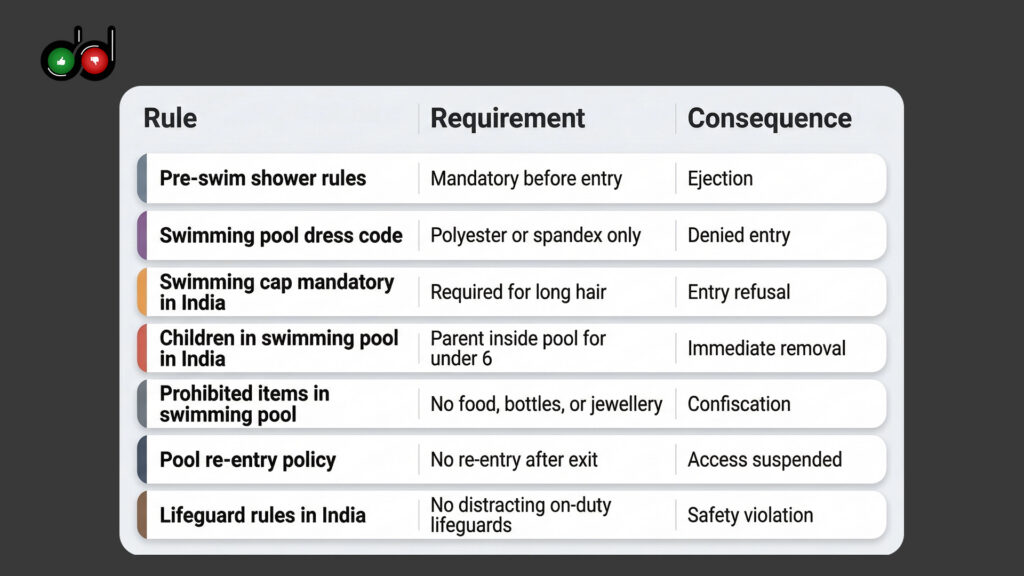
    Quick Glance: Swimming Pool Rules at a Glance

    Picture this: “A woman is swimming laps at her society pool. A man stands at the edge, not swimming, just watching. She complains to the RWA. He loses pool access for the month. Most societies treat this as a conduct violation, not a minor issue.”

    Following swimming pool safety guidelines keeps everyone safe. Next we cover the etiquette rules most Indian swimmers don’t even know exist.

    Pool Etiquette Rules That Most Indian Swimmers Don’t Know Are Mandatory

    Most Indian swimmers know the basic swimming pool rules. Fewer know that etiquette violations at society and hotel pools carry the same consequences as safety violations. 

    RWA committees in gated communities across Mumbai, Delhi, and Bengaluru actively revoke pool access for repeated breaches of society swimming pool rules that India mandates.

    1. No Food, No Drink, No Exceptions

    Eating or drinking inside the pool area violates swimming pool rules at most facilities. This includes mineral water bottles and chewing gum. Both count as prohibited items in swimming pool zones. 

    Disposing of either near the water creates contamination that directly impacts filtration performance and overall swimming pool etiquette standards the facility is required to maintain.

    2. Noise, Photography, and Behaviour Rules Around the Pool

    Shouting, playing loud music, and recording other swimmers without consent are all prohibited under swimming pool etiquette guidelines. Photography inside changing rooms violates Indian privacy norms outright. 

    “A man at a Delhi society pool spent 20 minutes recording women swimmers on his phone, claiming he was on a video call. Another resident reported it. The RWA reviewed CCTV footage, revoked his access permanently, and filed a formal complaint. His family lost pool privileges too.”

    Most society pools now include mobile phone usage restrictions as part of their written pool safety guidelines and India entry policies.

    3. Re-Entry, Timing, and Access Card Rules for Society Pools

    Pool re-entry policy at most residential facilities is straightforward. Once you leave, you don’t come back in the same session. Access cards or pool registers control entry under standard swimming pool rules at managed societies. 

    Guest slots are typically capped at two per registered flat per session. Fixed maintenance breaks mean the pool closes midday regardless of how many swimmers are inside.

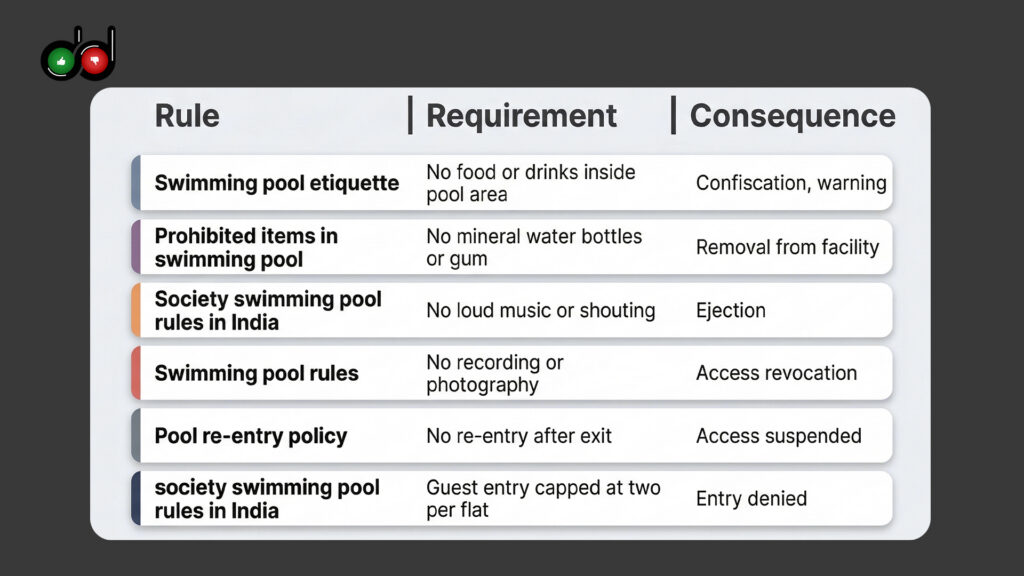
    Quick Glance: Pool Etiquette Rules at a Glance

    These rules protect every swimmer using the facility. Next we will see how Dos and Don’ts keep you prepared before you arrive.

    How Dos and Don’ts Keep You Pool-Ready Before You Arrive

    Most platforms give you photos and star ratings. Dos and Don’ts gives you the actual swimming pool rules you need before you walk through the gate. 

    Our platform covers 10,000+ public and private spaces across India with objective, location-specific guidelines.

    • Verified Rule Sets: Accurate entry requirements, swimming pool dress code standards, and documentation requirements for every facility
    • Structured Information: Clear, bulleted pool safety guidelines in India formatted for quick reading on the go
    • Universal Coverage: Hotels, society pools, gyms, and resorts are all covered under one platform.
    • Time Savings: Know the swimming pool etiquette rules before arriving and avoid getting turned away.
    • Cultural Intelligence: Location-specific society swimming pool rules in India that reflect local norms and RWA policies

    Explore how Dos and Don’ts simplifies swimming pool rules and helps you visit with confidence → Dos and Don’ts

    Conclusion

    Swimming pool rules in India aren’t optional. BIS IS 16508:2017, and society swimming pool rules in India enforce real consequences. 

    Most swimmers get the swimming pool dress code wrong, skip pre-swim shower rules, or ignore swimming pool etiquette entirely. 

    The result is ejection, permanent access revocation, or worse, a preventable drowning incident. India recorded 38,503 drowning deaths in 2022 alone. 

    Showing up uninformed puts you and everyone around you at risk. Check the Dos and Don’ts before your next pool visit and arrive knowing exactly what’s expected of you.

    Frequently Asked Questions

    1. Can I wear a T-shirt or regular shorts to swim in an Indian pool?

    No. Cotton clothes being banned in pool facilities is a firm rule across India. Swimming pool dress code standards only permit polyester or spandex swimwear. Cotton sheds fibres that clog filtration systems. Men can wear nylon shorts; women must wear proper swimsuits only.

    2. Is a swimming cap mandatory at Indian pools?

    Yes. The swimming cap mandatory in India applies to anyone with long hair at regulated pools. BIS 16508 public pool standards require caps to prevent hair debris from entering filtration systems. Even where enforcement is inconsistent, the requirement exists under official pool safety guidelines in India.

    3. Are children allowed in swimming pools in India without a parent?

    No. Children in swimming pools in India: guidelines require children under 6 to have a parent inside the pool at all times. Society swimming pool rules in India set their own minimum age thresholds. Violating swimming pool rules for child supervision is grounds for immediate removal.

    4. Can I bring food or a water bottle to an Indian swimming pool?

    No. Outside food and beverages are prohibited items in swimming pool zones at most Indian facilities. This includes mineral water bottles. Swimming pool etiquette standards treat food disposal near water as a contamination violation under pool safety guidelines and India operational guidelines.

    5. What happens if I break swimming pool rules in India?

    Consequences range from verbal warnings to permanent access revocation. society swimming pool rules in India, enforced by RWA committees, treats repeated swimming pool etiquette violations seriously. Hotel pools reserve the right to refuse entry without refund. Serious swimming pool rule breaches can also result in formal complaints.

    Leave a Reply

    Your email address will not be published. Required fields are marked *